

Pumpernickel Bread
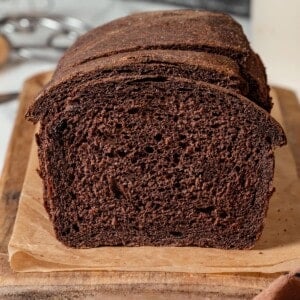
Homemade pumpernickel bread is easier than you think! This is a rich, dark, bakery-style loaf with deep rye flavour, with cocoa powder to give it its signature colour and complexity.
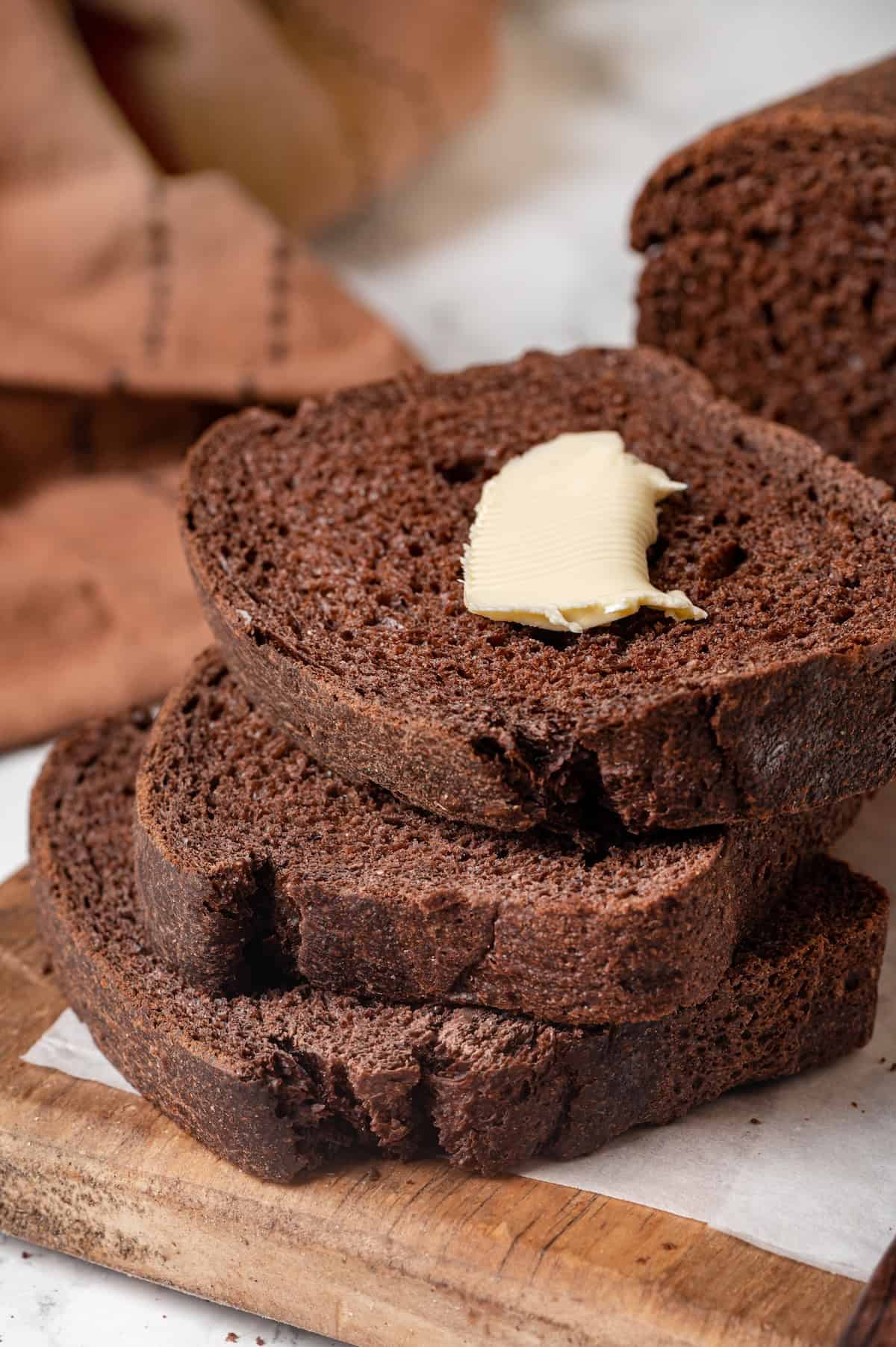
Bread baking has become a hobby of mine and I always look forward to tackling new varieties. Up until now, I’ve mostly done white bread recipes, like gluten-free sandwich bread and vegan Japanese milk bread. But I had a craving for hearty pumpernickel bread for making sandwiches with my chickpea tuna salad. So here it is! It’s got that earthy rye flavour, bread flour for a nice chewy texture, and whole wheat flour for some extra whole grain goodness. This is just like the bread you’ll find at a New York style deli—and you get the satisfaction of saying you made it yourself!
Why You’ll Love Making Your Own Pumpernickel Bread
If you’ve made other types of bread before, you can totally make this pumpernickel recipe too! Here’s why it’s so worth it.
- Deli-style pumpernickel flavour. If you love that earthy, assertive flavour of a good rye bread, you get that here, with the added depth of cocoa powder.
- Soft but sturdy texture. Perfect for slicing, toasting, and making into epic vegan sandwiches.
- No kneading. Yes, this is a no-knead recipe! (You’ll also love this crusty no-knead bread.)
Notes on Ingredients
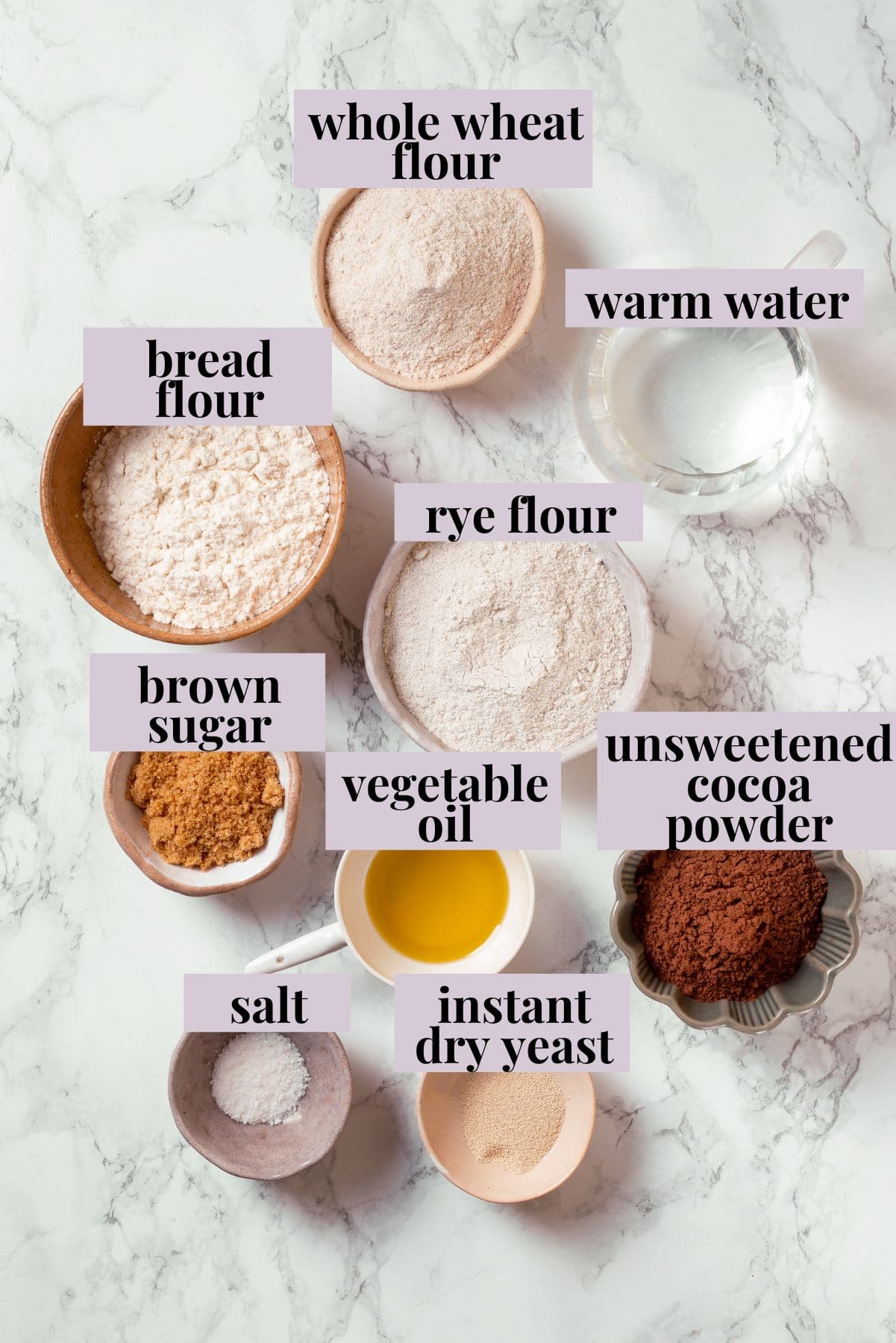
The ingredient list for homemade pumpernickel bread is surprisingly short and sweet! Scroll down to the recipe card to find the ingredient quantities and recipe instructions.
- Warm water – If you have a thermometer, it should be around 105ºF. Otherwise, you want it to feel warm but not hot.
- Instant dry yeast – Learn more: Is Yeast Vegan?
- Brown sugar – Adds subtle sweetness, which is essential for that classic pumpernickel flavour.
- Vegetable oil – For a tender, moist crumb.
- Flour – A combination of rye flour, bread flour, and whole wheat flour.
- Unsweetened cocoa powder – For dark color and a pleasingly mild bitterness.
- Salt
How to Make Pumpernickel Bread
Let’s get started! Here’s what you’ll need to do.
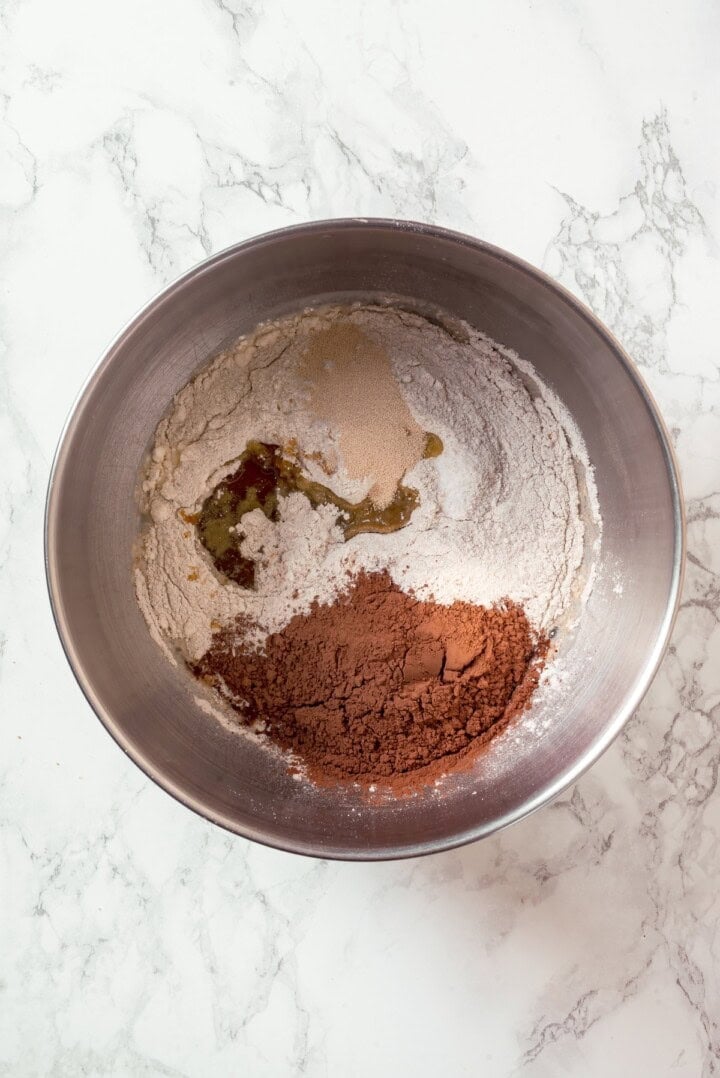
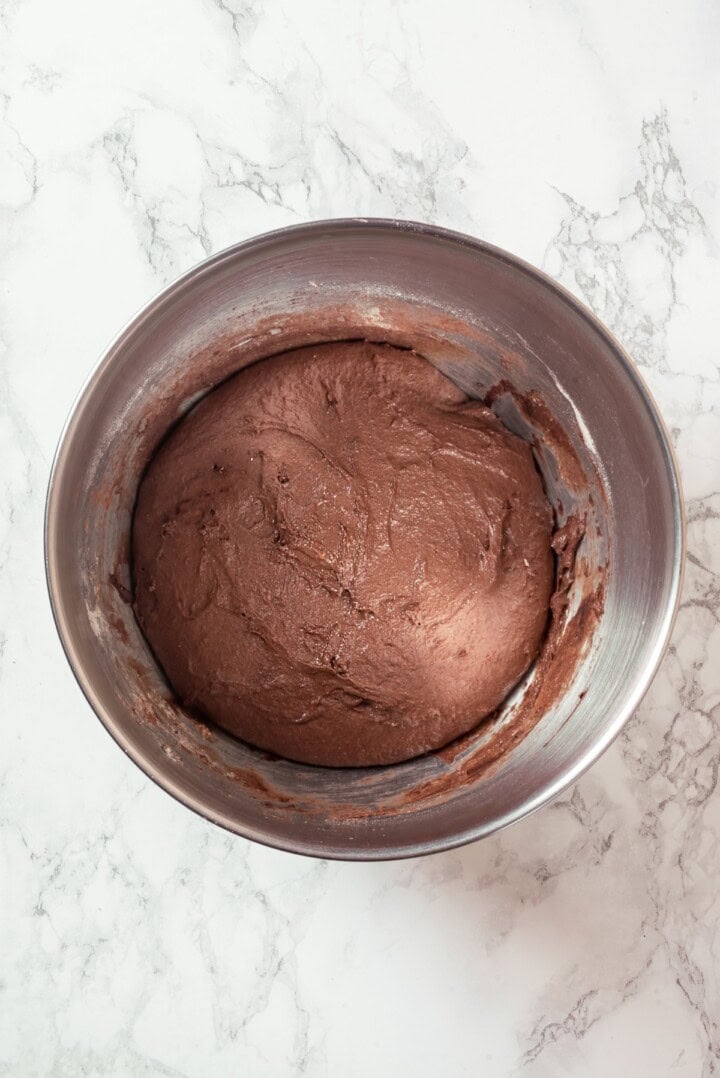
- Make the dough. Add all the ingredients to a food processor or large bowl. Process or stir until a very soft, sticky dough forms.
- First proof. Cover the dough and let it rise until puffed and slightly expanded, or about an hour and a half.
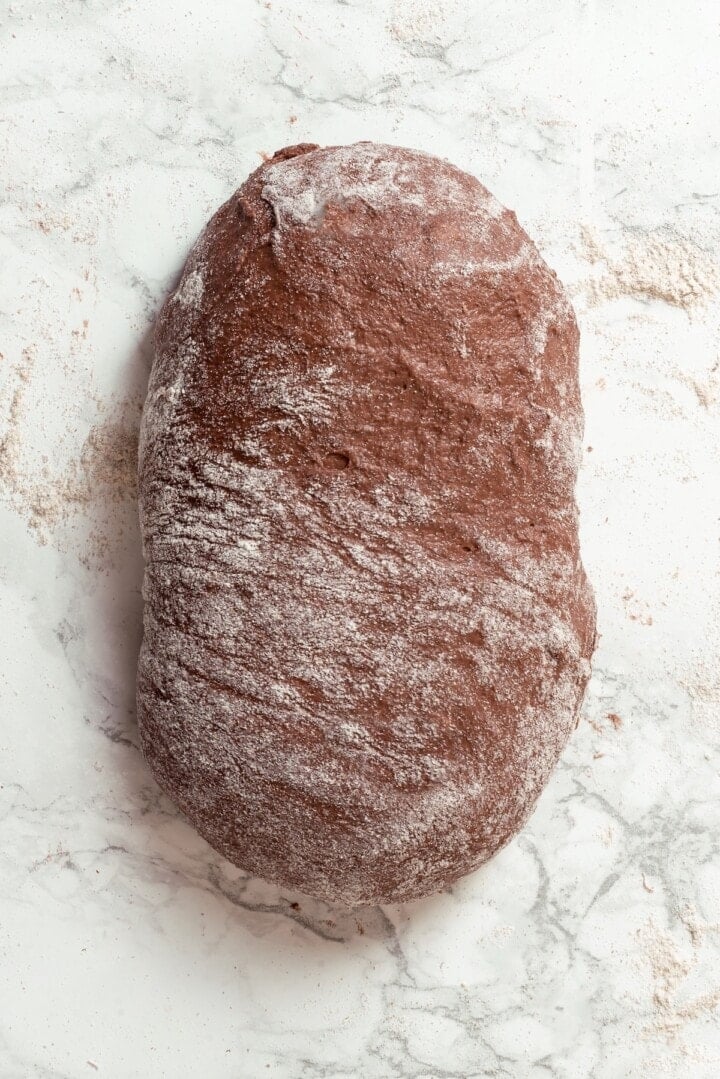
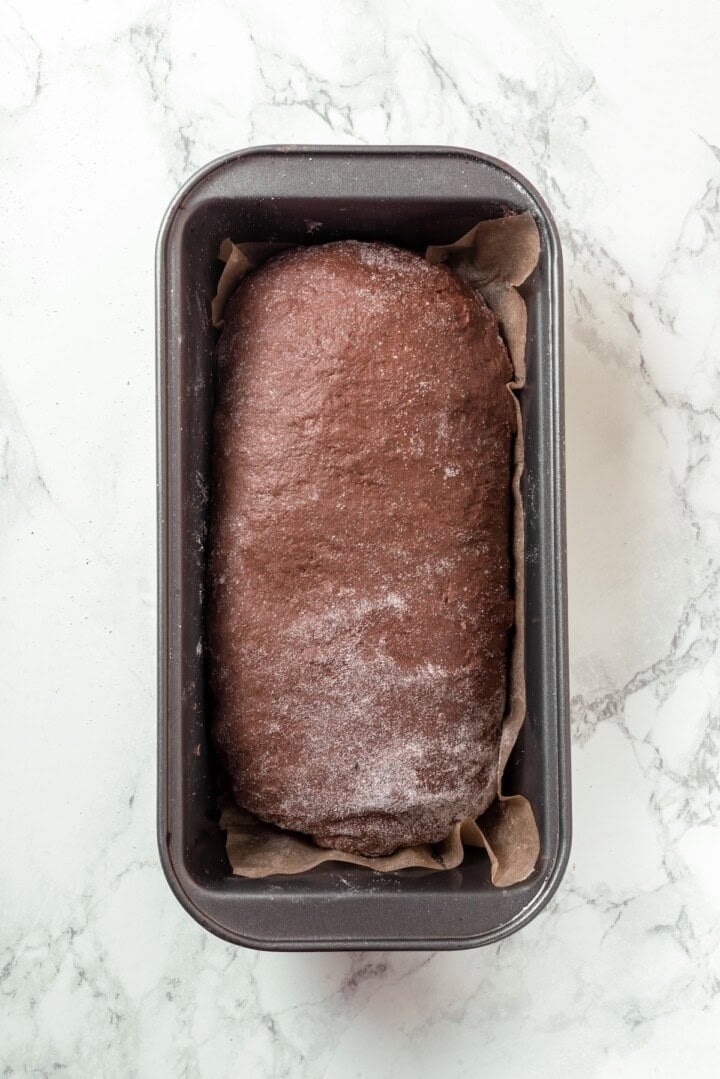
- Shape the loaf. Form into a log to bake on a baking sheet or scrape the dough into a loaf pan.
- Second proof. Let the dough rise again for about 40 minutes, or until lightly puffy.
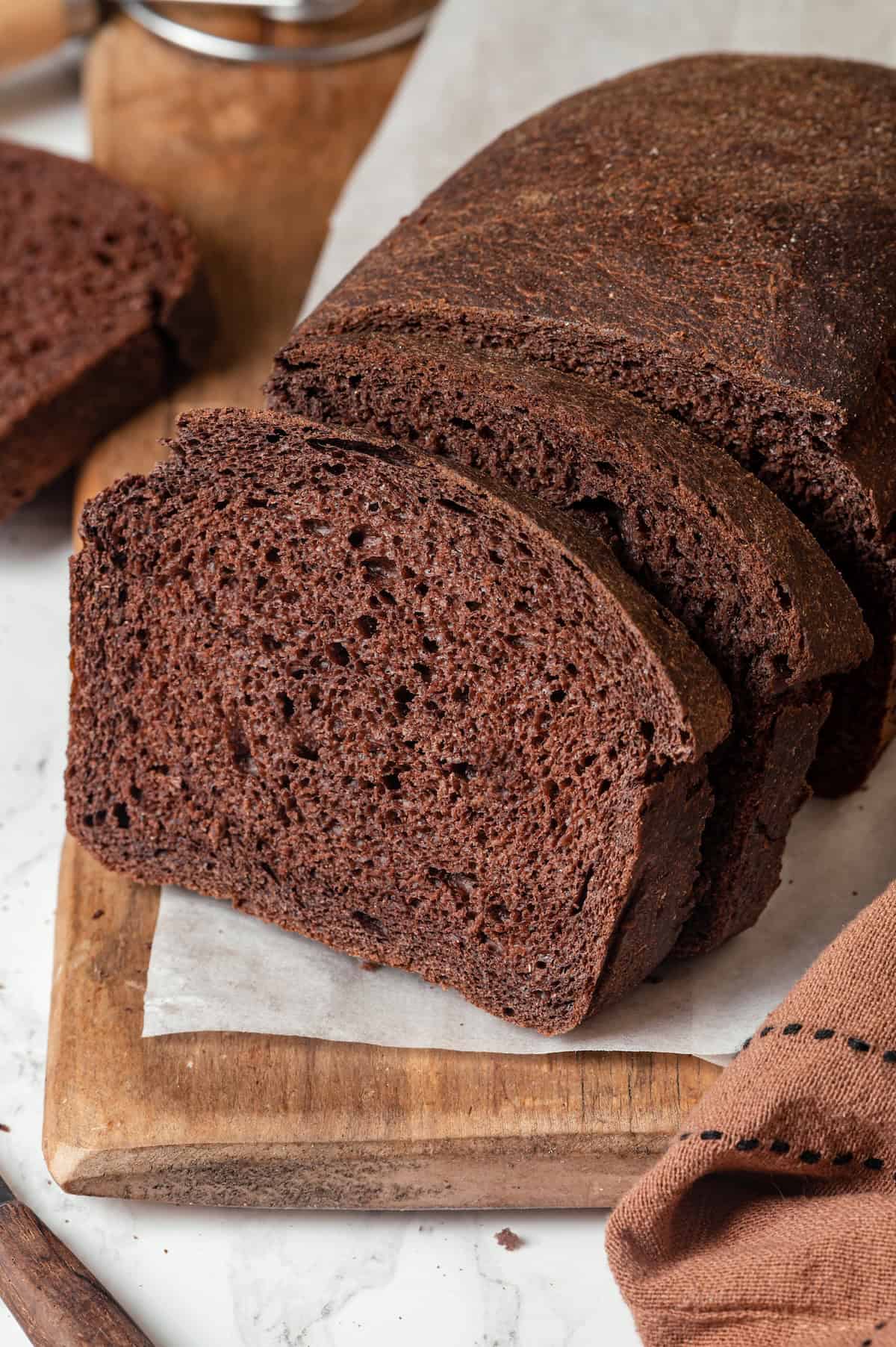
- Bake and cool. Bake at 425ºF until firm and hollow-sounding when tapped, then cool completely before slicing.
Tips and Variations
Here are a few more notes on this pumpernickel bread recipe.
- Add caraway seeds. They’ll give the bread an authentic deli-style flavour.
- Watch the dough, not the clock. The amount of time it takes to rise will depend on the temperature in your kitchen, so use the time in the recipe as a guideline only.
- Make sure your yeast is active. Learn more: How to Test Yeast to See if it’s Still Good.
- Let the loaf cool COMPLETELY. The bread will continue to “bake” during the cooling time; slicing too soon will make the centre gummy.
Serving Suggestions
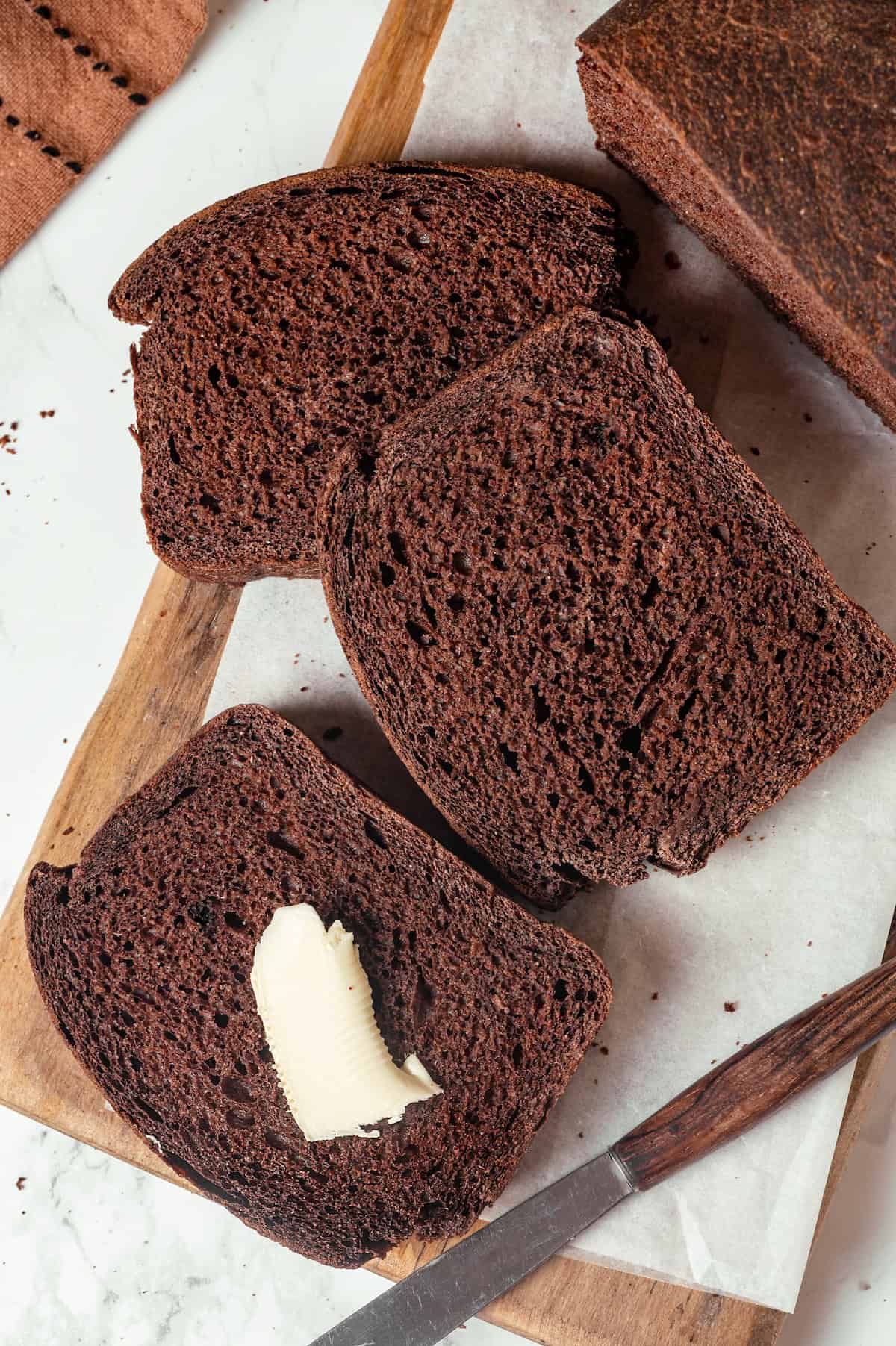
Use this pumpernickel bread for sandwiches, toast it and slather on some vegan butter, or layer on some carrot lox and vegan cream cheese for an open-faced sandwich. It’s also great for serving with a hearty soup like my creamy vegan mushroom wild rice soup.
Storage
Wrap your loaf of pumpernickel bread tightly and store at room temperature for up to 3 days or freeze for up to 3 months. Thaw at room temperature before using.
More Vegan Bread Recipes
Pumpernickel Bread
Ingredients
- 1 ¼ cups warm water, about 105°F – 300mL
- 1 teaspoon instant dry yeast, 3g
- 2 tablespoons brown sugar, 25g
- 2 tablespoons vegetable oil, 30mL
- 1 ½ cups rye flour, 180g
- 1 ½ cups bread flour, 190g
- ½ cup whole wheat flour, 60g
- 2 tablespoons unsweetened cocoa powder, 12g
- 1 teaspoon salt, 6g
Instructions
- Add the warm water to the bowl of a food processor (or a large mixing bowl). Add the rye flour, bread flour, whole wheat flour, unsweetened cocoa powder, instant dry yeast, brown sugar, salt, and vegetable oil.
- Mix the dough (food processor method): Pulse and then run the food processor just until a very soft, sticky dough forms and pulls away from the sides slightly. This takes about 5 minutes.
- Optional hand-mixing method: Stir everything together with a sturdy spoon until no dry flour remains. The dough will be loose, sticky, and more like a thick paste than a kneadable dough.
- Cover tightly and let rise at room temperature for 1 hour 30 minutes, until visibly puffy and expanded. It will not double fully.
Shape the loaf (two options)
- Log method: Generously dust a work surface with rye flour. Turn out the dough (it will be very soft and sticky). Lightly dust the top and gently roll into a rough log shape. Transfer to a parchment-lined baking sheet.
- Pan method (easiest): Simply scrape the dough into a lined or well-oiled loaf pan and smooth the top with wet or oiled hands.
- Cover loosely and let rise for 40 minutes.
- Preheat the oven to 425°F (220°C). Bake for 35–40 minutes, until the loaf is firm, deeply colored, and sounds hollow when tapped. Internal temperature should be about 200°F (93°C).
- Remove from the oven and cool completely on a rack before slicing. This bread sets as it cools and slices best once fully cooled.
Notes
Disclaimer: Although jessicainthekitchen.com attempts to provide accurate nutritional information, kindly note that these are only estimates. Nutritional information may be affected based on the product type, the brand that was purchased, and in other unforeseeable ways. Jessicainthekitchen.com will not be held liable for any loss or damage resulting for your reliance on nutritional information. If you need to follow a specific caloric regimen, please consult your doctor first.


Do you have a way to make this gluten free? have always loved pumpernickle bread before having to go gluten free.
Hi Peggy,
Unfortunately the Rye is really what makes this Pumpernickel Bread. We do have some gluten free bread options that would be great to try though. Take a peek at our Gluten Free Sandwich Bread, and the Gluten Free Focaccia!
Hi Jessica
I haven’t made this pumpernickel bread yet ,but it’s on my list. could you tell me what size loaf pan is used in this recipe
Thank you
Doug
Hi Doug,
You can use a standard loaf pan for this (8.5-9 inches!). Excited for you to give it a whirl!