

Aglio e Olio
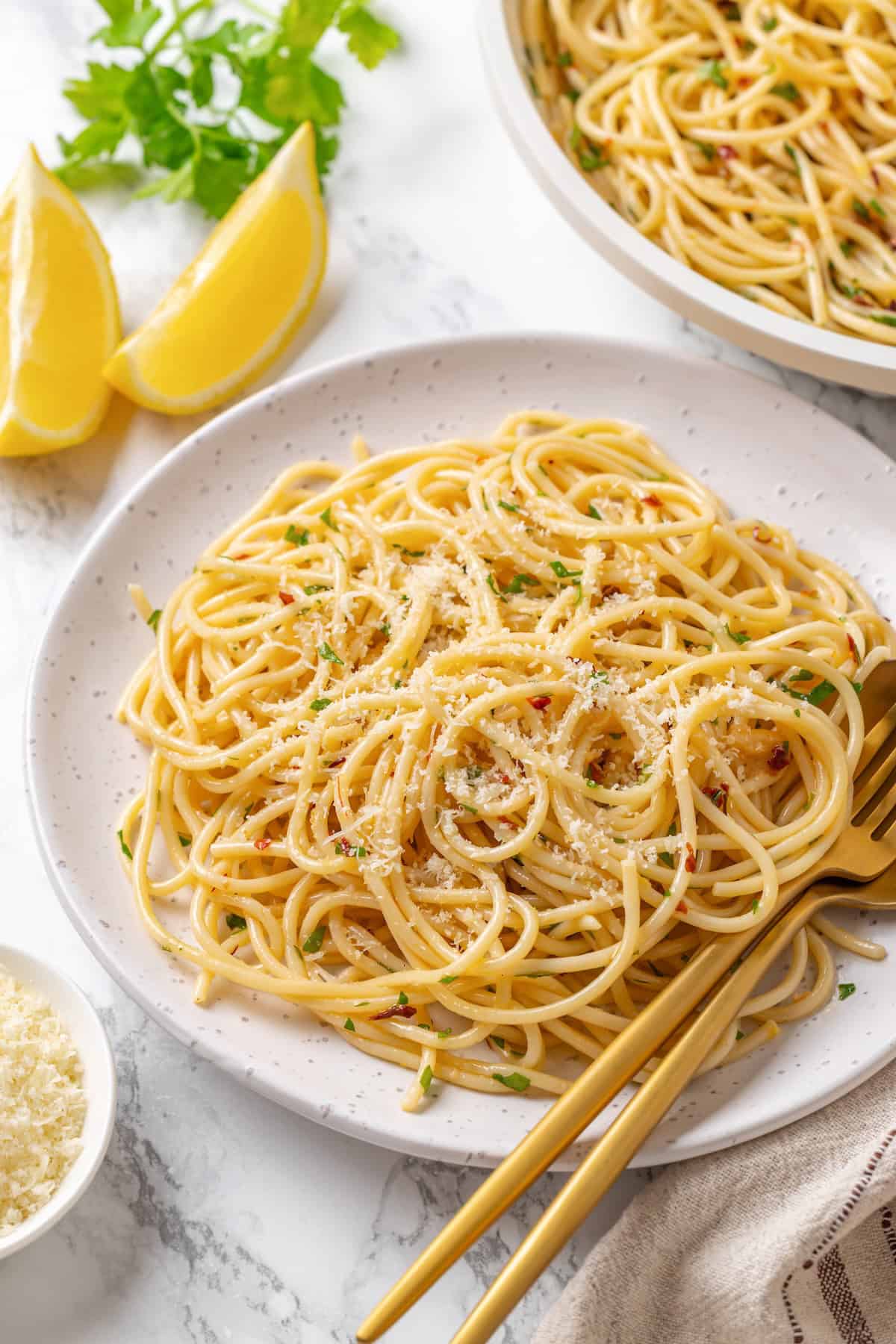
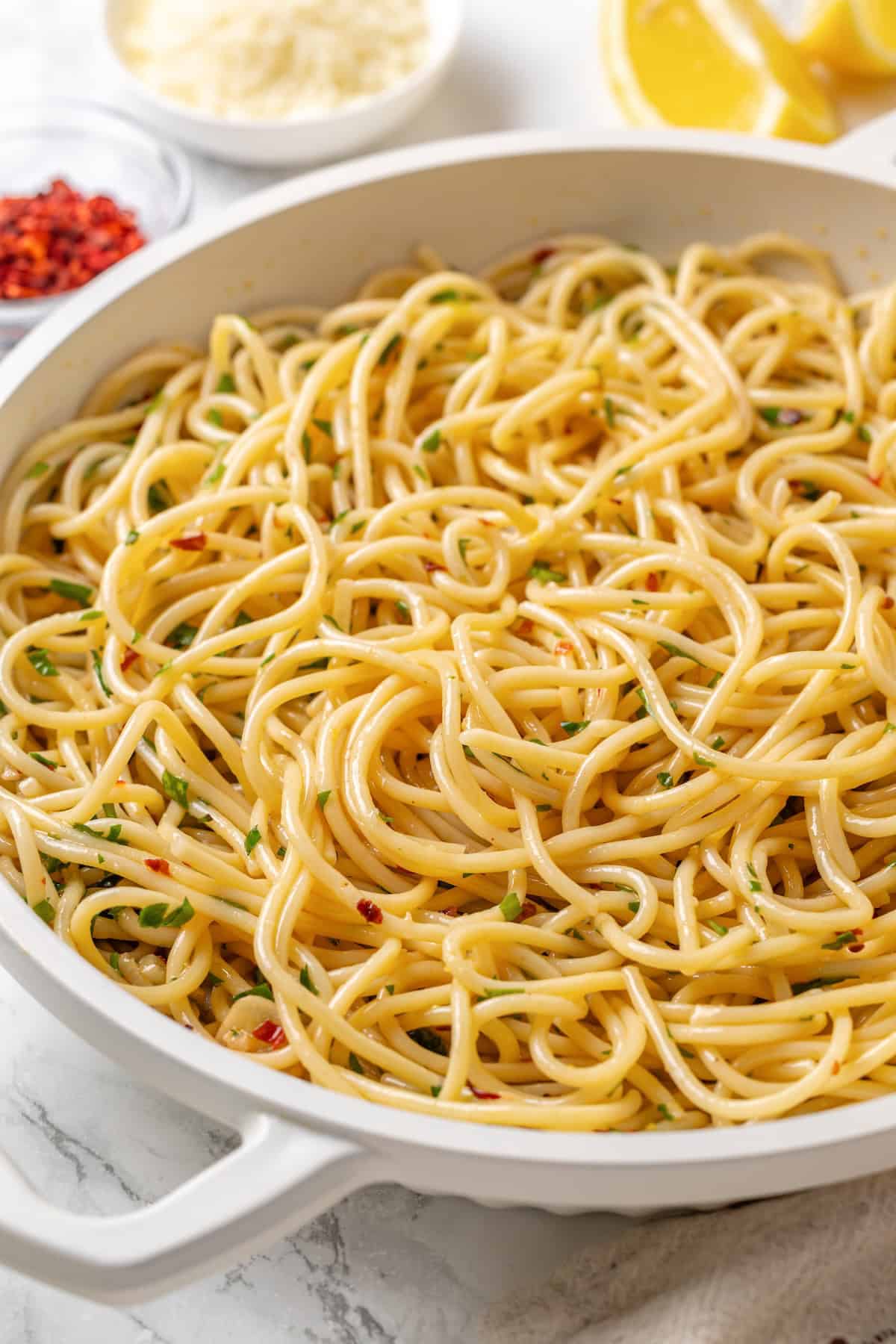
I made this easy aglio e olio every night after a long law school day, and it was so easy to make no matter how tired I was. It features al dente spaghetti coated in a velvety garlic-infused sauce with a touch of heat from red pepper flakes. It’s a simple Italian classic you’ll want to make again and again.
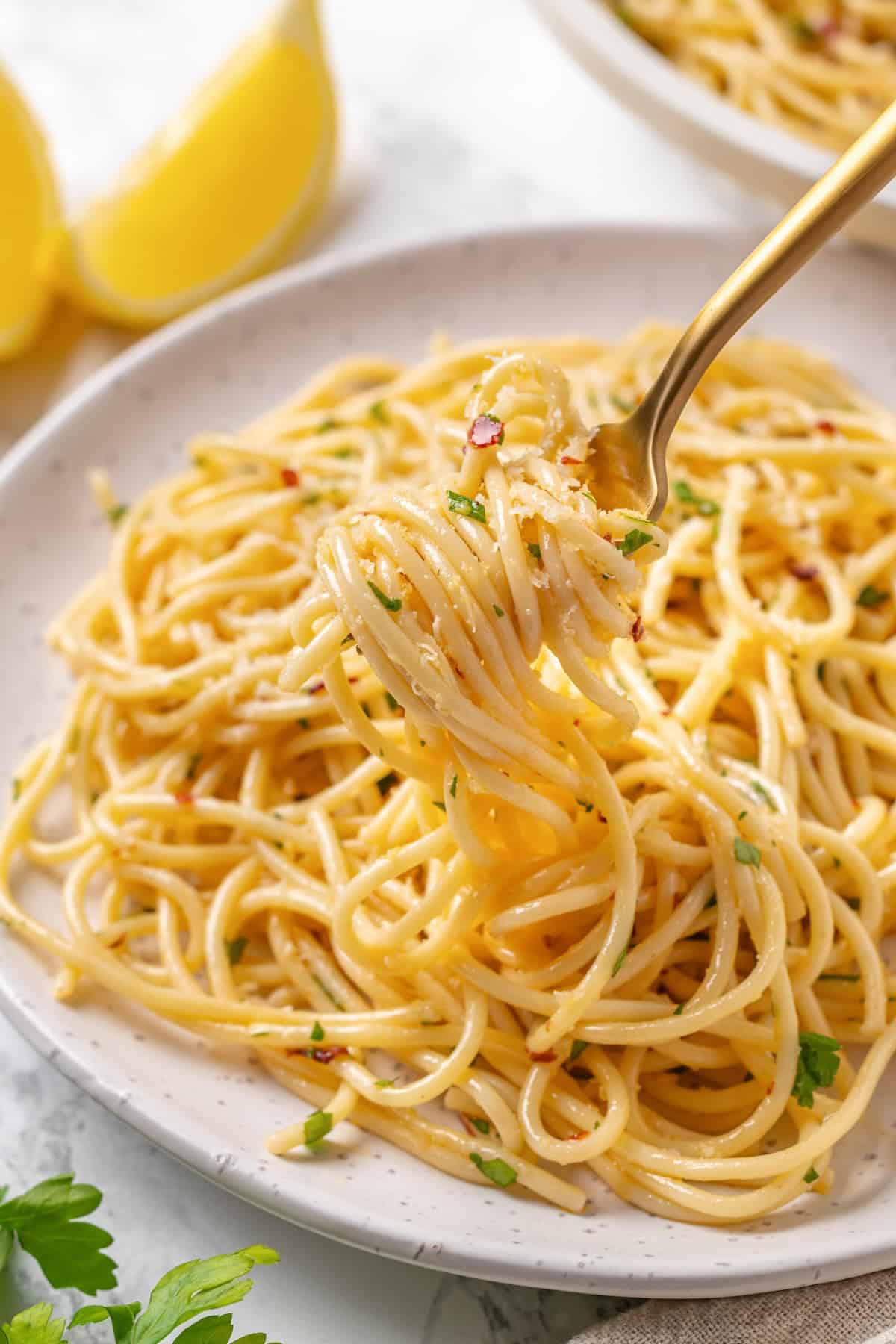
One of my favourite things about Italian recipes is how they transform just a few simple ingredients into a satisfying culinary experience. This 25-minute spaghetti aglio e olio is no exception. The sauce isn’t much more than quality olive oil, garlic, and starchy pasta water, with a little help from red pepper flakes, lemon, and parsley. And it turns out SO flavourful. The silky-smooth sauce coats every al dente noodle in garlicky goodness. I topped mine with vegan parmesan cheese, too, which brings an added layer of richness.
Considered one of the simpler classic Italian pasta dishes (Cacio e Pepe is a close second), aglio e olio is ideal for beginners and expert home cooks alike. So throw on your apron and fire up the stove!
It’s Time to Make Classic Aglio e Olio
Looking for a reason to cook up something quick and easy without sacrificing on flavourful? Let me tell you why this aglio e olio is it:
- This aglio e olio recipe does what Italians do best. It transforms a few simple ingredients (just 6 plus some optional add-ins) into an unforgettable meal in under 30 minutes. Weeknight dinner? I think so!
- The sauce is SO smooth and velvety. You’d think it has butter or even cream in it, but nope. The olive oil and starchy pasta water work together to make this glossy masterpiece.
- Lightly sautéing the garlic gives it this perfectly nutty, almost sweet flavour. But it still maintains a hint of that “spice” raw garlic delivers. It works so well with the zing from the lemon and the subtle heat from the red pepper flakes.
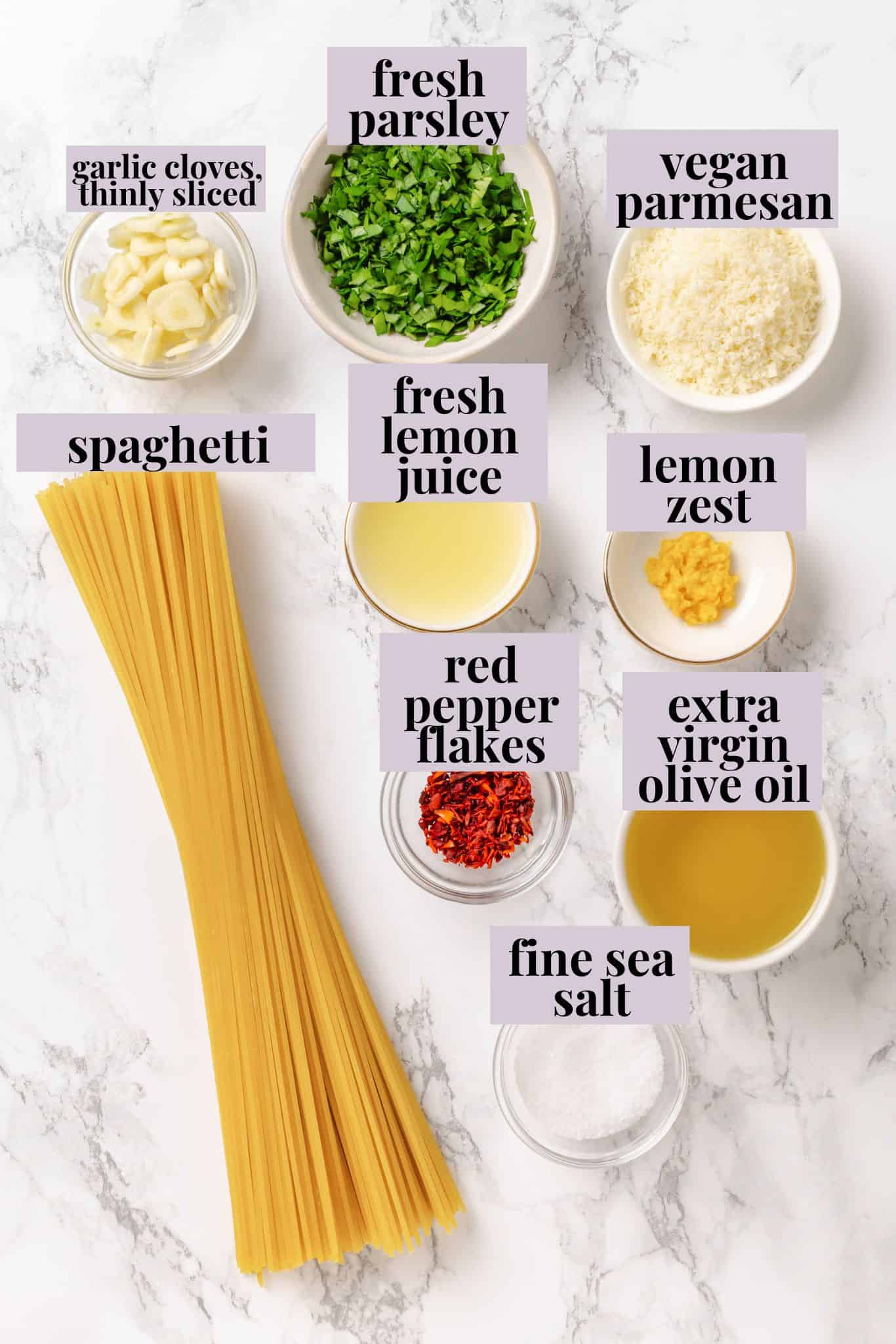
Notes on Ingredients
You’ll only need a handful of ingredients for this recipe, many of which you might already have in your pantry. Here’s a checklist for you (see the recipe card below for precise measurements):
- Spaghetti – You could technically use any pasta shape, but spaghetti is the traditional choice. If you prefer a thinner, more delicate pasta, linguini would be great. So would bucatini for a heartier feel.
- Fine sea salt – You’ll use it to salt the pasta water, a crucial step that ensures your pasta doesn’t turn out bland. Table salt would also do the trick.
- Extra virgin olive oil – “Olio” in Italian. Opt for a high-quality, young olive oil here. Younger olive oils have this almost spicy quality that adds a little pep to this simple dish.
- Garlic – AKA “aglio” in Italian. Slice it nice and thin for the best flavour distribution.
- Red pepper flakes – Add as much or as little as you’d like. If spice isn’t your thing, you can leave it out.
- Fresh parsley – Finely chopped Italian or flat-leaf parsley. For a hint of freshness and a pop of colour.
- Fresh lemon juice – This is optional and breaks away from more traditional recipes, but I like the freshness it contributes. Squeeze it fresh from the fruit. Bottled lemon juice just isn’t the same.
- Lemon zest – Again, optional if you want to add a little extra zing.
- Vegan parmesan – As an optional garnish. Grab some from the store or make your own. My Homemade Vegan Parmesan is pretty amazing.
How to Make Vegan Aglio e Olio
Ready to make spaghetti aglio e olio? Here’s a quick look at how it’s done. For more detailed instructions, see the recipe card below.
- Cook the spaghetti. Bring a large pot of water to a rolling boil. Add the salt and the spaghetti. Cook until al dente according to the package’s instructions.
- Reserve some pasta water. Scoop 1 1/2 cups of pasta water (360ml) out of the pot and set aside.
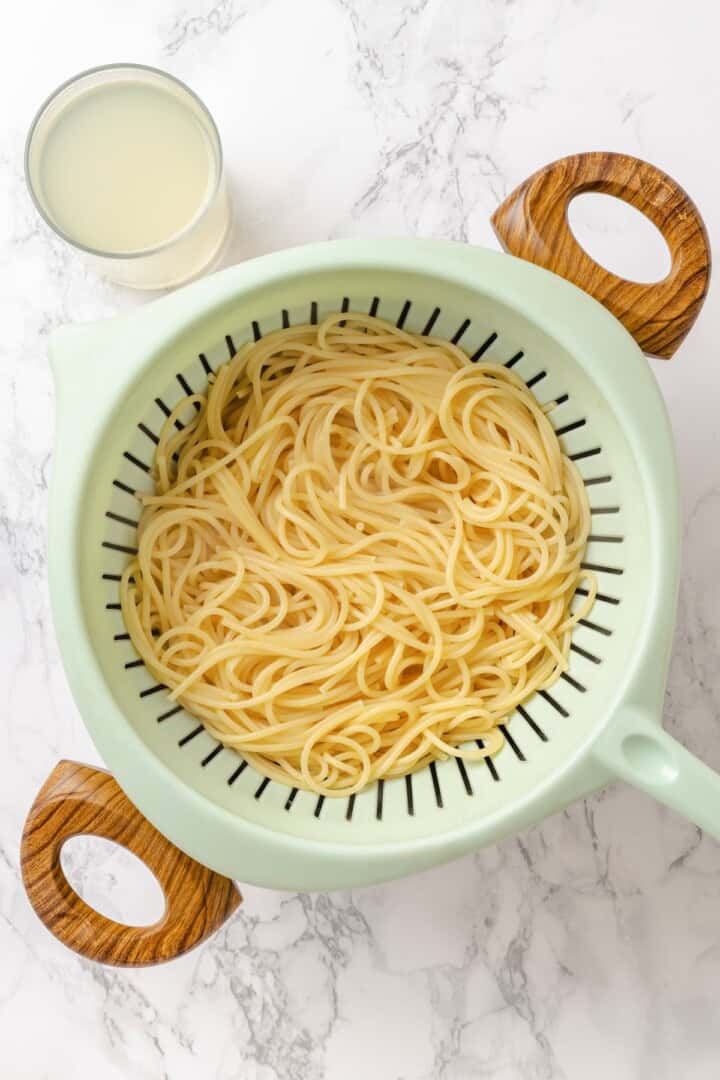
- Drain. Drain the spaghetti.
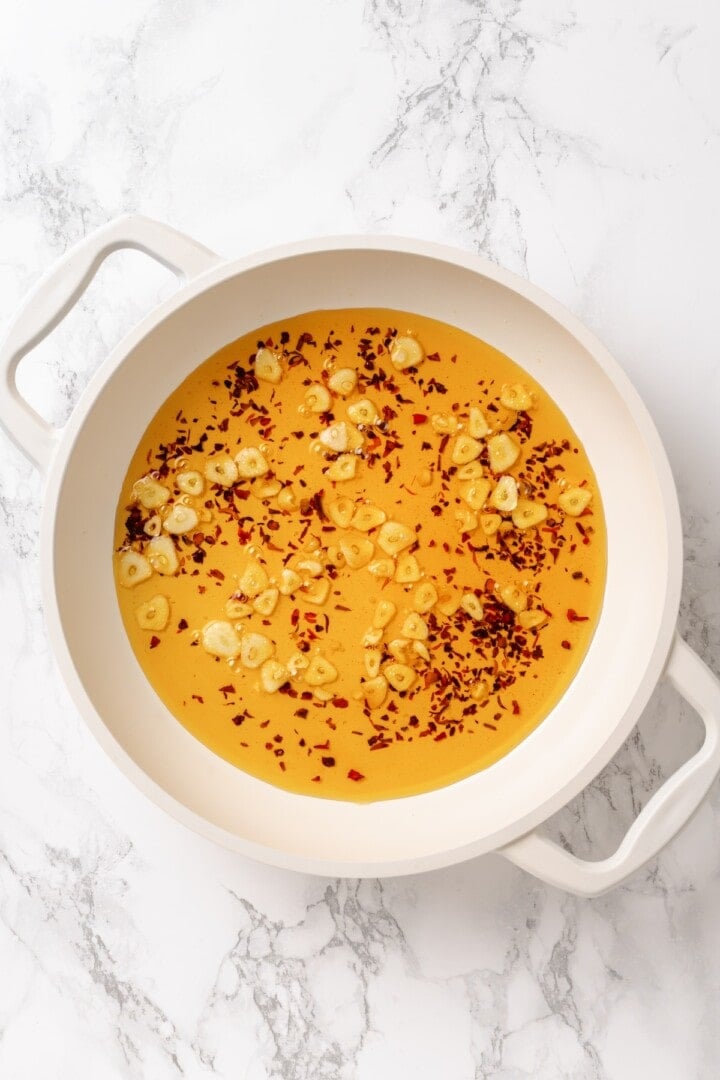
- Sauté. In a wide skillet, sauté the garlic in the olive oil over low heat for 2-3 minutes. Add the red pepper flakes and sauté for 30 seconds.
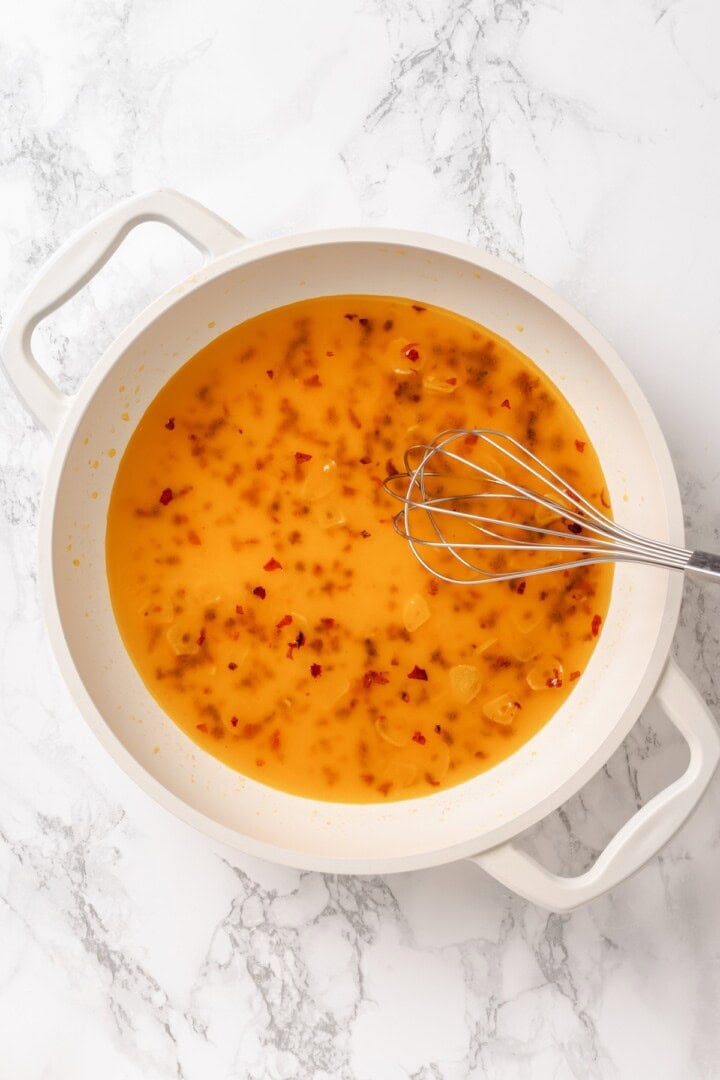
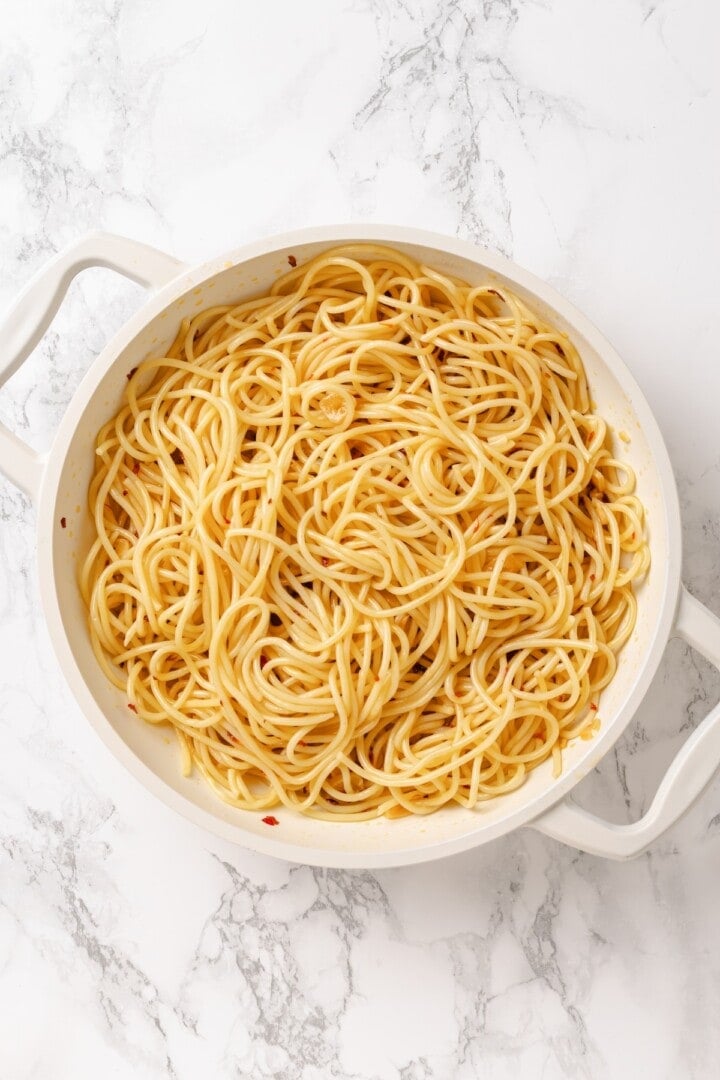
- Add the pasta water. Pour 1/2 cup of the reserved pasta water (120ml) into the pan. Raise the heat to medium and let it bubble for a few seconds.
- Put it all together. Add the spaghetti to the pan. You’ll want to toss it continuously for 1-2 minutes, adding pasta water as you go until the pasta looks glossy (not oily) and lightly coated in sauce.
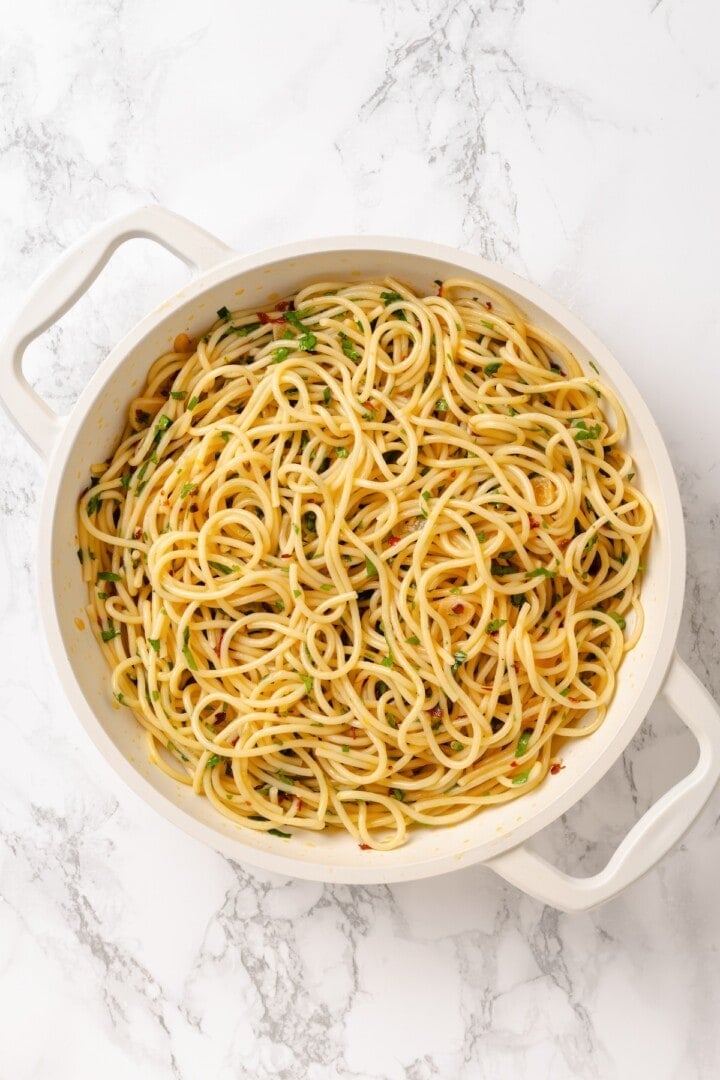
- Finishing touches. Turn off the heat and toss in the parsley, lemon juice, and lemon zest.
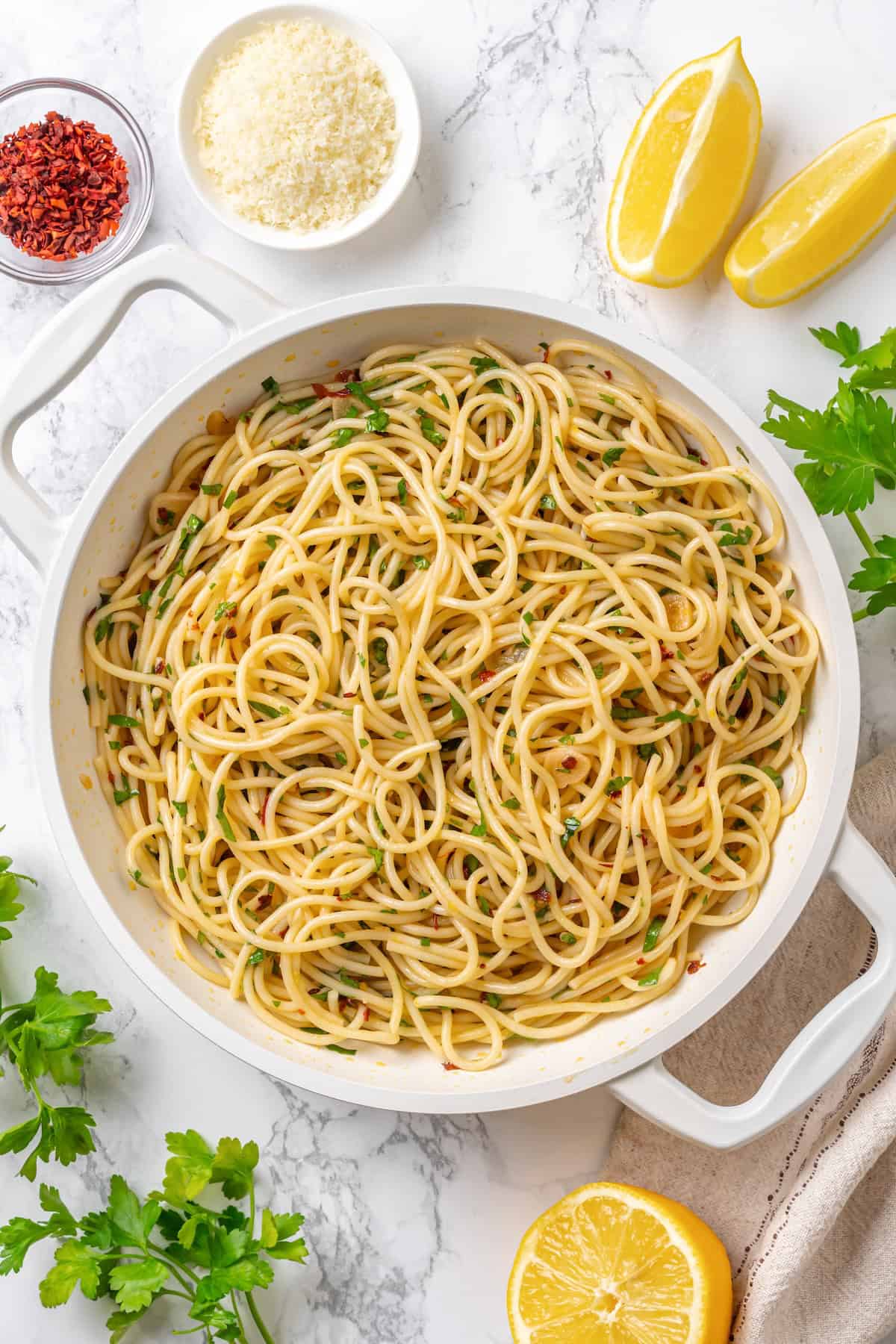
- Serve. Serve immediately with vegan parmesan, if you’d like.
Tips for Success
Aglio e olio is wonderfully simple to make, but there are a few things you’ll want to keep in mind as you follow the recipe:
- Don’t forget the salt. Salting the pasta water is a crucial step. The dry pasta will absorb the flavour of the water it’s cooked in. Plus, the pasta water is used in the sauce. If you forget the salt, the spaghetti AND the sauce will suffer.
- Al dente. Cook the pasta just to al dente and no more. It should be soft and flexible, but it should still have a slight bite to it.
- Reserve some pasta water. It can be too easy to forget this step and just drain all the pasta water once the spaghetti is done cooking. You need the pasta water for the sauce, though.
- Keep the heat low. When sautéing the garlic, keep the heat low so it maintains its sweet, nutty aroma. If you turn the heat up, you risk the garlic (and olive oil) turning bitter.
- Keep it moving. When sautéing the garlic, stir consistently to ensure even, gentle cooking. Also, when tossing the pasta in the sauce, do so continuously until every noodle is coated.
- Be generous with the pasta water. As you toss the spaghetti in the sauce, keep adding pasta water until each and every noodle has a smooth, glossy coating. The pasta water helps the oil and water emulsify. Without it, the oil separates, leaving you with a greasy dish.
Variation Ideas
Feeling creative? This recipe is a wonderful base for experimentation. Here are a few ways to make it your own:
- Veggie addition. If you’d like to add some sautéed mushrooms, spinach, and/or cherry tomatoes, go for it. I would just toss them in at the end.
- Shrimp aglio e olio. Sauté some shrimp in the garlic-infused olive oil. Remove it before adding the pasta and creating the sauce (to prevent over-cooking). Then, toss it back in at the end.
- Breadcrumbs crunch. If you’d like to do it like the Southern Italians, lightly toast some seasoned breadcrumbs in olive oil and toss them into the finished dish. This simple breadcrumb “seasoning” is called “pangrattato”.
How to Store and Reheat Extras
- Refrigerator: Seal the fully cooled leftovers in an airtight container and store in the fridge for up to 5 days.
- Freezer: Once cool, seal any leftover aglio e olio in a freezer-safe airtight container. It’ll keep in the freezer for up to 3 months. Allow it to thaw in the fridge before reheating.
- To reheat: You can microwave a portion of leftover spaghetti aglio e olio in 30-second intervals until warm. Otherwise, heat a little olive oil over low heat in a pan and add the pasta, slowly stirring until heated through. In either case, you may want to add a little water or broth to loosen things up.
More Vegan Pasta Recipes
If pasta is your ultimate comfort food, I have a few more outstanding recipes you’ve got to try. Here they come:
Enjoy friends! If you make this vegan aglio e olio, please snap a photo and tag #jessicainthekitchen on Instagram! We’d also love it if you would leave a comment below, and give the recipe a rating! Thanks so much!

Spaghetti Aglio e Olio
Ingredients
- 8 ounces spaghetti, 225g
- 1 tablespoon fine sea salt, for pasta water, 18g
- ¼ cup extra virgin olive oil, 60ml
- 5 cloves garlic, thinly sliced, 15g
- ½ teaspoon red pepper flakes, adjust to taste, 1g
- ¼ cup fresh parsley, finely chopped, 15g
- 1 tablespoon fresh lemon juice, optional, 15ml
- ½ teaspoon lemon zest, optional, 1g
- ¼ cup vegan parmesan, for serving, optional, 20g
Instructions
- Bring a large pot of water to a rolling boil. Add the salt and cook the spaghetti according to the package directions until al dente, meaning it should still have a slight bite in the center.
- Before draining the pasta, carefully scoop out 1½ cup (360ml) of the pasta water and set it aside (you may not use all of it). Then drain the spaghetti.
- While the pasta cooks, pour the olive oil into a wide skillet or sauté pan and place it over low heat. Add the sliced garlic and cook gently for 2-3 minutes, stirring often, until it is fragrant and lightly golden. Do not let it get dark brown, or it will taste bitter.
- Add the red pepper flakes and stir for about 30 seconds so they flavour the oil.
- Pour about ½ cup (120ml) of the reserved pasta water into the pan. Raise the heat to medium and let it bubble for a few seconds. This helps the oil and water combine into a light sauce.
- Add the drained spaghetti to the pan. Toss continuously with tongs or a spoon for 1-2 minutes so the pasta absorbs the sauce. Add a little more pasta water as needed until the pasta looks glossy and lightly coated, not dry and not sitting in oil. I used around ½ cup (120ml).
- Turn off the heat. Add the parsley, lemon juice, and lemon zest, then toss again until everything is evenly mixed.
- Serve immediately, with vegan parmesan on top if desired.
Notes
- Don’t forget the salt. Seriously. This flavours the pasta itself and the sauce, since the pasta water is a key component of the sauce.
- Keep the heat low. When sautéing the garlic, keep the heat low and keep on stirring for the best mellow, nutty garlic flavour.
- Be generous with the pasta water. As you toss the spaghetti in the sauce, keep adding pasta water until each and every noodle has a smooth, glossy coating.
- Storing leftovers. Seal the fully cooled leftovers in an airtight container and store in the fridge for up to 5 days or in the freezer for up to 3 months. Reheat over low heat on the stove or in the microwave (add a little water or broth if needed).
Disclaimer: Although jessicainthekitchen.com attempts to provide accurate nutritional information, kindly note that these are only estimates. Nutritional information may be affected based on the product type, the brand that was purchased, and in other unforeseeable ways. Jessicainthekitchen.com will not be held liable for any loss or damage resulting for your reliance on nutritional information. If you need to follow a specific caloric regimen, please consult your doctor first.



I just tried this tonight and it is so yummy! I used semolina bucatini (also the first time I’ve used this!) and I was worried it might not work but it was fine. I didn’t have red pepper flakes so I substituted fresh ground black pepper. I didn’t have any vegan parmesan so I went without, and it was fine. Next time I may try the toasted bread crumb topping. I plan to make this dish often!
Hi Corinne,
Sounds absolutely delicious! Thank you for sharing. So happy to hear that this one will be a repeat in your kitchen.
Yummy! Great combo!