

Vegetable Biryani
This vegan vegetable biryani is fragrant, flavourful, and perfect for pairing with all your favourite Indian curries! It’s loaded with vegetables, so you can make a meal of it or serve it as a side dish.

If you haven’t had it before, vegetable biryani is an Indian dish made with rice, vegetables, spices, and herbs. The name is derived from the Persian word “birian,” which means “fried before cooking.” This refers to how the spices and vegetables are cooked together in a pot before the rice gets added. It’s sort of like an Indian version of fried rice.
To really bring out the flavors in this dish, use freshly ground spices. It’s the secret to enhancing the flavours! I love serving biryani with homemade curries like my chickpea tikka masala and vegan butter chicken, with a side of naan.
The Perks of Making Vegetable Biryani at Home
On the whole, Indian cuisine tends to be very vegan-friendly, but there’s a hidden dairy ingredient in many popular dishes: ghee, or clarified butter. Since going vegan, I skip the restaurant biryani and make it myself, without ghee. This homemade recipe is:
- 100% vegan. This version uses olive oil instead of clarified butter, along with coconut milk and veggie broth.
- Made in one pot. Most biryani recipes are one-pot wonders. Cooking everything in the same pan elevates the flavours.
- Very flexible. The best part about making vegetable biryani from scratch? The adaptability! Customize the vegetables and add in protein, like tofu. I include a few easy variations later on.
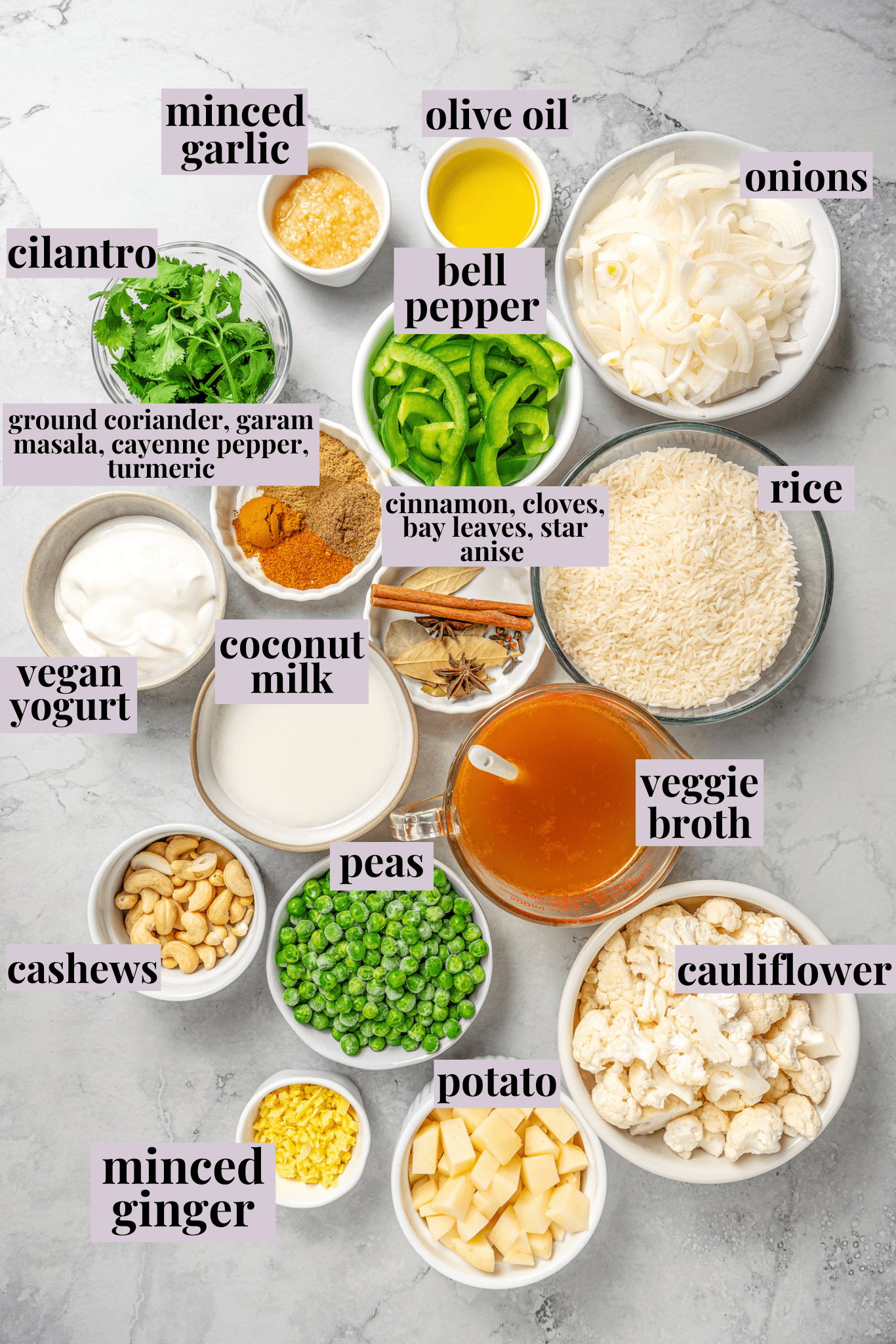
Notes on ingredients
Scroll down to the recipe card to find the ingredient quantities and recipe instructions.
- Olive oil – You can use vegetable oil or canola oil in place of olive oil.
- Raw cashews – Chopped. Swap cashews with peanuts if you’d like.
- Yellow onions – White onions or shallots are fine, too.
- Garlic and Ginger – Use fresh garlic and ginger root, not ground. The flavour is much stronger.
- Aromatics – You’ll toss in a cinnamon stick, whole cloves, star anise, and bay leaves to infuse the rice.
- Ground coriander – If you aren’t a fan of coriander, use dried parsley instead.
- Garam masala – A ready-made Indian spice blend. Most major grocery stores carry garam masala in the spice aisle or with the international foods.
- Cayenne pepper – You can use less for a milder vegetable biryani, or omit it.
- Turmeric – Ground turmeric gives biryani its signature golden colour.
- Green bell pepper – Or any color.
- Cauliflower florets – Save time by buying a package of pre-cut cauliflower. Frozen cauliflower will also work, just make sure to thaw it completely.
- Russet potato – You can substitute another potato variety, like Yukon Gold, baby potatoes, or fingerlings, if you’d like.
- Peas – Not a fan of peas? Try swapping them out for edamame or chickpeas.
- Plain unsweetened vegan yogurt – Use store-bought or homemade vegan yogurt.
- Coconut milk – Use full-fat coconut milk here. Not to be confused with coconut cream, which is sweetened and won’t work in this rice dish.
- Vegetable broth – I use my homemade vegetable broth from veggie scraps.
- Basmati rice – Rinse this well, until the water runs clear. This washes off the excess starch and keeps the rice from sticking together.
How Is Basmati Rice Different from Regular Rice?
Basmati rice is a type of long-grain rice commonly used in Indian and Middle Eastern cuisines. It has a nutty aroma (some say it smells like popcorn!), and when cooked, it becomes light and fluffy. It’s much more flavourful than your standard white or brown rice, so it’s the preferred choice when making vegetable biryani.

How to Make Vegan Vegetable Biryani
Once you’ve gathered all of your ingredients, this vegetable biryani comes together quickly. Here’s what you’ll need to do.
- Prepare. First, warm a teaspoon of oil in a large pot or Dutch oven set over medium heat.
- Toast the cashews. Add the cashew pieces to the heated oil and cook for 2 to 3 minutes, or until golden brown. Transfer the toasted cashews to a small bowl or plate.


- Cook the onions, garlic, and ginger. Next, add 1 tablespoon of oil to the pot and add the onions. Cook for 3 to 4 minutes, or until just softened. Add the garlic and ginger and cook for a minute or two, or until fragrant.
- Bloom the spices. Add another tablespoon of oil to the pot, along with the cinnamon stick, cloves, bay leaves, coriander, garam masala, cayenne pepper, star anise, and turmeric. Cook for about a minute, or until the spices are fragrant.
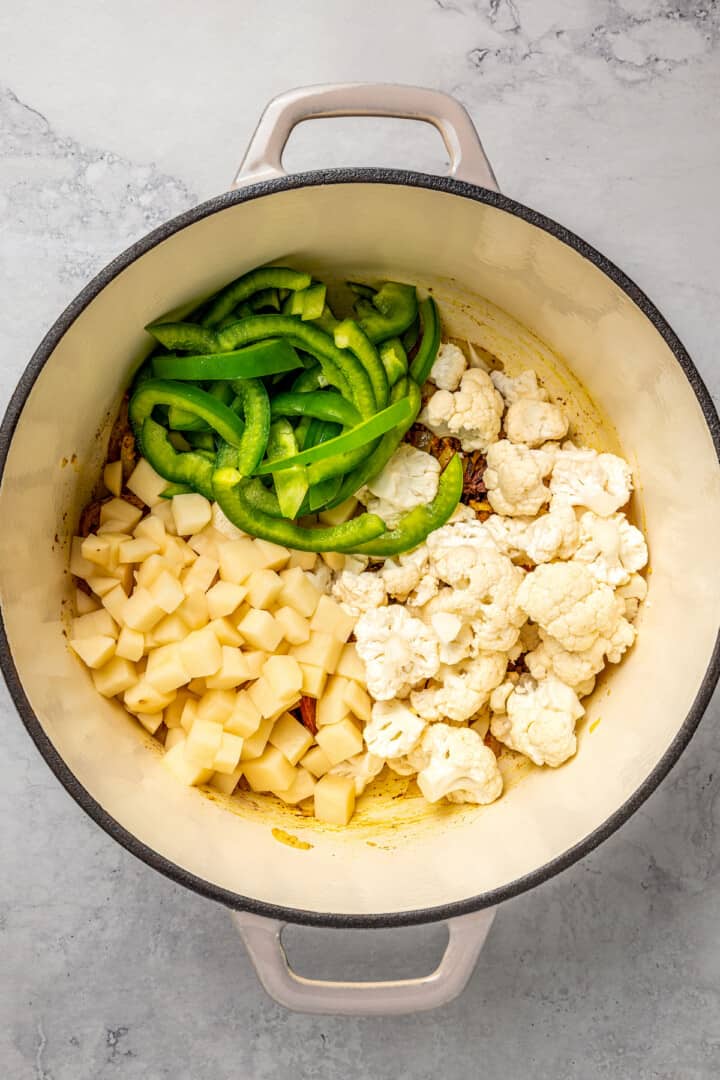

- Cook the vegetables. Now, stir the potato, bell pepper, cauliflower, and salt into the pot. Cover and cook for 20 minutes, stirring often. Remove the lid and stir in the peas. If you’re using the vegan yogurt, stir it in at this point and cook for 2 to 3 minutes.


- Add the rice. Lastly, stir the rice, broth, and coconut milk into the pot. Bring to a boil, then cover and reduce the heat to low. Simmer, covered, for 20 minutes.
- Finish. Sprinkle the toasted cashews and fresh cilantro over the biryani and serve warm.
Tips for the Best Biryani
- Rinse the rice before cooking it. This will make it less sticky and more fluffy once cooked.
- Keep a close eye on the spices. Don’t walk away from the stovetop when you’re blooming the spices. You want them toasted and fragrant, not burnt!
- Don’t turn up the heat. Simmer the rice over low heat and check once in a while to make sure the liquid hasn’t cooked off. Add more broth if needed.

Variations
Vegetable biryani is the kind of versatile dish that can be easily customised to your tastes. Here are a few ideas for changing things up:
- More veggies. Use other vegetables such as zucchini, eggplant, or mushrooms.
- Protein. Toss in some chickpeas, fried tofu, or tempeh for a boost of protein.
- Dried fruit. Add dried fruit like raisins, chopped apricots, or currants for a sweet twist.
What to Serve With Vegetable Biryani
I love serving this vegetable biryani as part of a full vegan Indian feast. Serve it alongside Indian malai kofta, vegan Mulligatawny soup, or any of the following ideas:
- Curries: Try this flavourful vegetable korma, red lentil dal, or an easy coconut chickpea curry.
- More sides: Serve your curry and rice with vegan garlic naan.
- Dessert: I love this Indian kaju katli cashew fudge when I feel like making something authentic and special for dessert!

How to Store
- Refrigerate. Vegetable biryani can be stored in an airtight container in the refrigerator for up to 5 days.
- Reheat. Reheat it in the microwave or in a skillet over low heat.
- Freeze. Transfer the leftovers to an airtight container or zip-top freezer bag and freeze for up to 3 months. To serve, allow the biryani to thaw in the fridge overnight, then reheat according to the instructions above.
More Vegan Rice Dishes
- Vegan Instant Pot Risotto
- Congri (Cuban Rice and Black Beans)
- Vegan Arancini Fried Rice Balls (With Air Fryer Option)
- Jamaican Rice and Peas
Enjoy friends! If you make this vegetable biryani, please snap a photo and tag #jessicainthekitchen on Instagram! We’d also love it if you would leave a comment below, and give the recipe a rating! Thanks so much!

Vegetable Biryani
Ingredients
- 1 teaspoon 4 grams + 2 tablespoon (24 grams) olive oil, divided
- ¼ cup raw cashew pieces, 55 grams
- 1 yellow onions, thinly sliced (225 grams)
- 2 tablespoons minced garlic, approximately 6 garlic cloves (32 grams)
- 2 tablespoons minced ginger, approximately 3 inches fresh ginger root (20 grams)
- 2 inches of cinnamon stick, 4 grams
- 6 whole cloves
- 4 bay leaves
- 2 tablespoons ground coriander, 12 grams
- 1 tablespoon garam masala, 5 grams
- 1 teaspoon cayenne pepper, optional
- 2 whole star anise
- 1 teaspoon turmeric, 3 grams
- 1 green bell pepper, thinly sliced (approximately 1 1⁄2 cups or 140 grams)
- 2 cups cauliflower florets, approximately 230 grams
- 1 russet potato, peeled cubed (1 1⁄2 cups or 250 grams)
- 1 ½ teaspoons salt, 10 grams
- 1 cup frozen peas, 130 grams
- ½ cup plain vegan yogurt, unsweetened, optional (122 grams)
- 1 cup canned coconut milk, 220 grams
- 1 ½ cups vegetable broth, 390 grams
- 2 cups basmati rice, rinsed (450 grams)
- Fresh cilantro for topping, optional
Instructions
- Place a large pot or dutch oven over medium heat and add 1 teaspoon of oil.
- Add the cashew pieces to the heated oil and cook for 2 – 3 minutes until golden brown.
- Remove the cooked cashew pieces from the pot and set aside.
- Add 1 tablespoon (12 grams) of oil to the pot and add onions. Cook until just softened, approximately 3 – 4 minutes.
- Add the garlic and ginger and cook until fragrant for approximately 1 – 2 minutes.
- Add another tablespoon (12 grams) of oil along with the cinnamon stick, cloves, bay leaves, coriander, garam masala, cayenne pepper, star anise, and turmeric. Cook until fragrant, approximately 1 minute.
- Add the potato, bell pepper, cauliflower florets, and salt, and stir to combine. Cover the pot with a lid and cook for 20 minutes, stirring often.
- Remove the lid and stir the peas into the vegetable and spice mixture.
- Optional step: Stir in the vegan yogurt if preferred and cook for another 2 – 3 minutes.
- Add the rice, broth, and coconut milk and stir to combine. Bring to a boil then cover the pot with a lid and reduce the heat to low. Simmer for 20 minutes.
- When finished, sprinkle on the cooked cashew pieces and fresh cilantro leaves and serve. Store in an airtight container in the fridge for up to 5 days.
Notes
- Oil: You can use vegetable oil or canola oil in place of olive oil if preferred.
- To store: Vegetable biryani can be stored in an airtight container in the refrigerator for up to 5 days. Reheat it in the microwave, or in a skillet over low heat.
- To freeze: Transfer the leftovers to an airtight container or zip-top freezer bag and freeze it for up to 3 months. To serve, allow the biryani to thaw in the fridge overnight then reheat according to the instructions above.
Disclaimer: Although jessicainthekitchen.com attempts to provide accurate nutritional information, kindly note that these are only estimates. Nutritional information may be affected based on the product type, the brand that was purchased, and in other unforeseeable ways. Jessicainthekitchen.com will not be held liable for any loss or damage resulting for your reliance on nutritional information. If you need to follow a specific caloric regimen, please consult your doctor first.



Hi Jessica. What can I sub for coconut milk ? Cashew crema? If so, how much?
Thanks!
Hi Deb,
Yes you can use cashew crema! You can use about 1 cup of slightly thinner cashew crema of a similar consistency to the coconut milk. I have a recipe on my website for a slightly thicker one if you need a recipe then just add like ½ cup water to slightly thin it out and use only 1 cup. Hope this helps and enjoy!
Thank you Jessica! Will definitely try this recipe! Best to you.