
Sourdough Cinnamon Rolls
I have been baking for 17 years and know for a fact that there are few things are more rewarding than pulling these vegan sourdough cinnamon rolls from the oven. They’re pillowy soft, packed with cinnamon sugar filling, and finished with a luscious dairy-free cream cheese glaze.
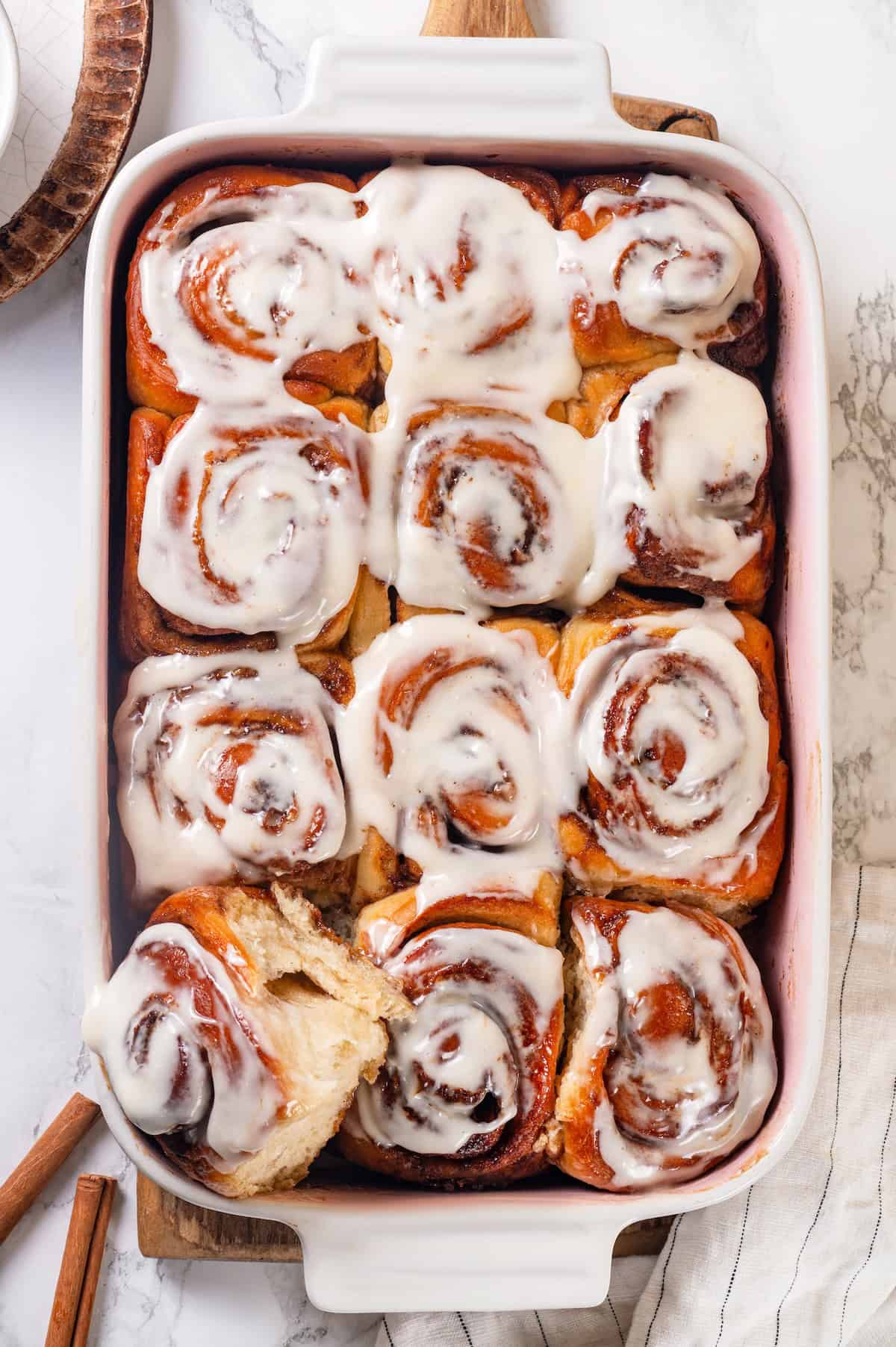
Baking with sourdough is a slow, satisfying process. The fermentation that causes the dough to rise happens over the course of a couple of days. It’s the perfect weekend project and gives these sourdough cinnamon rolls their incredible flavour and texture. P.S. You also have to check out my Dutch Oven Sourdough Bread.
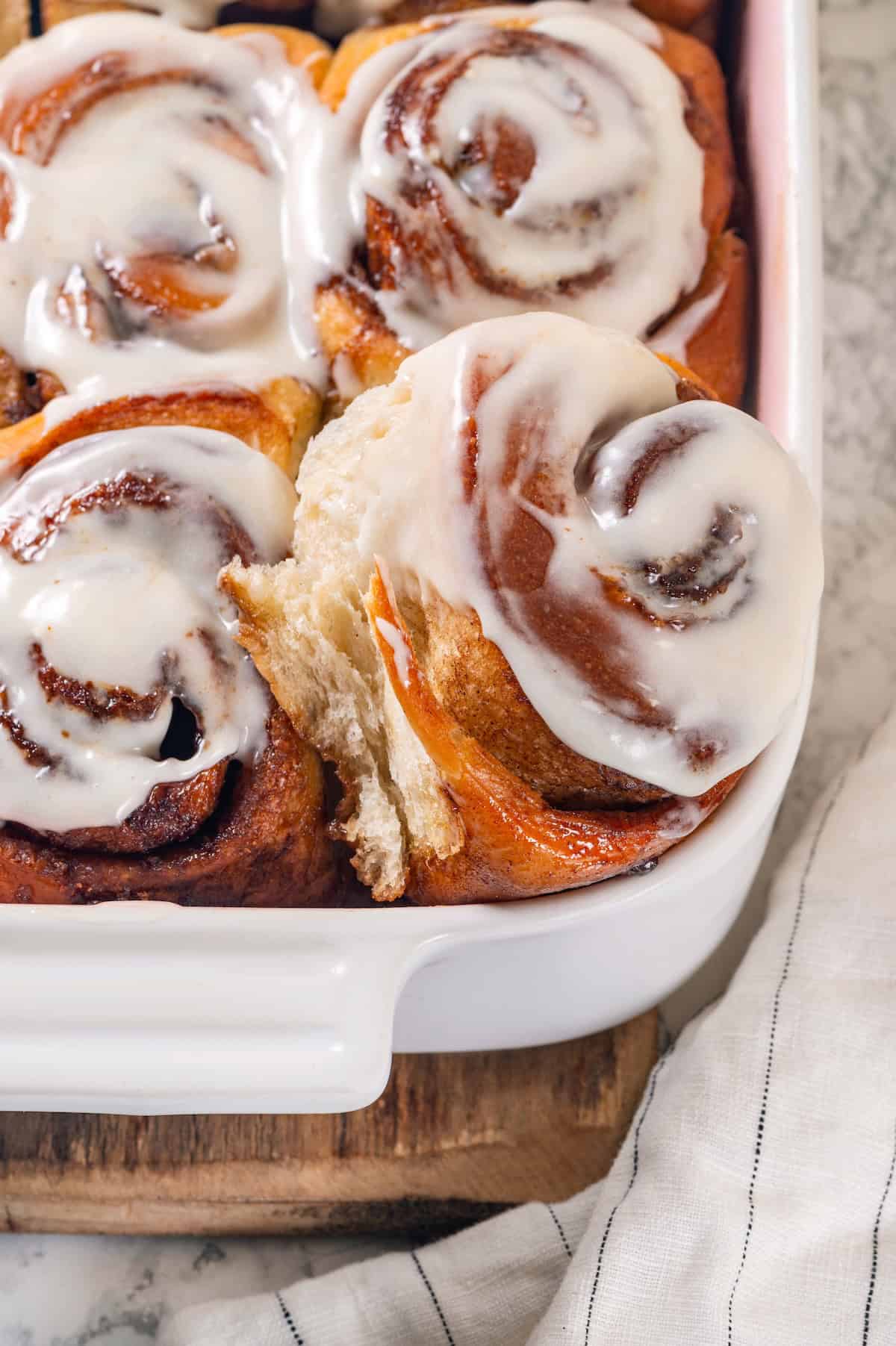
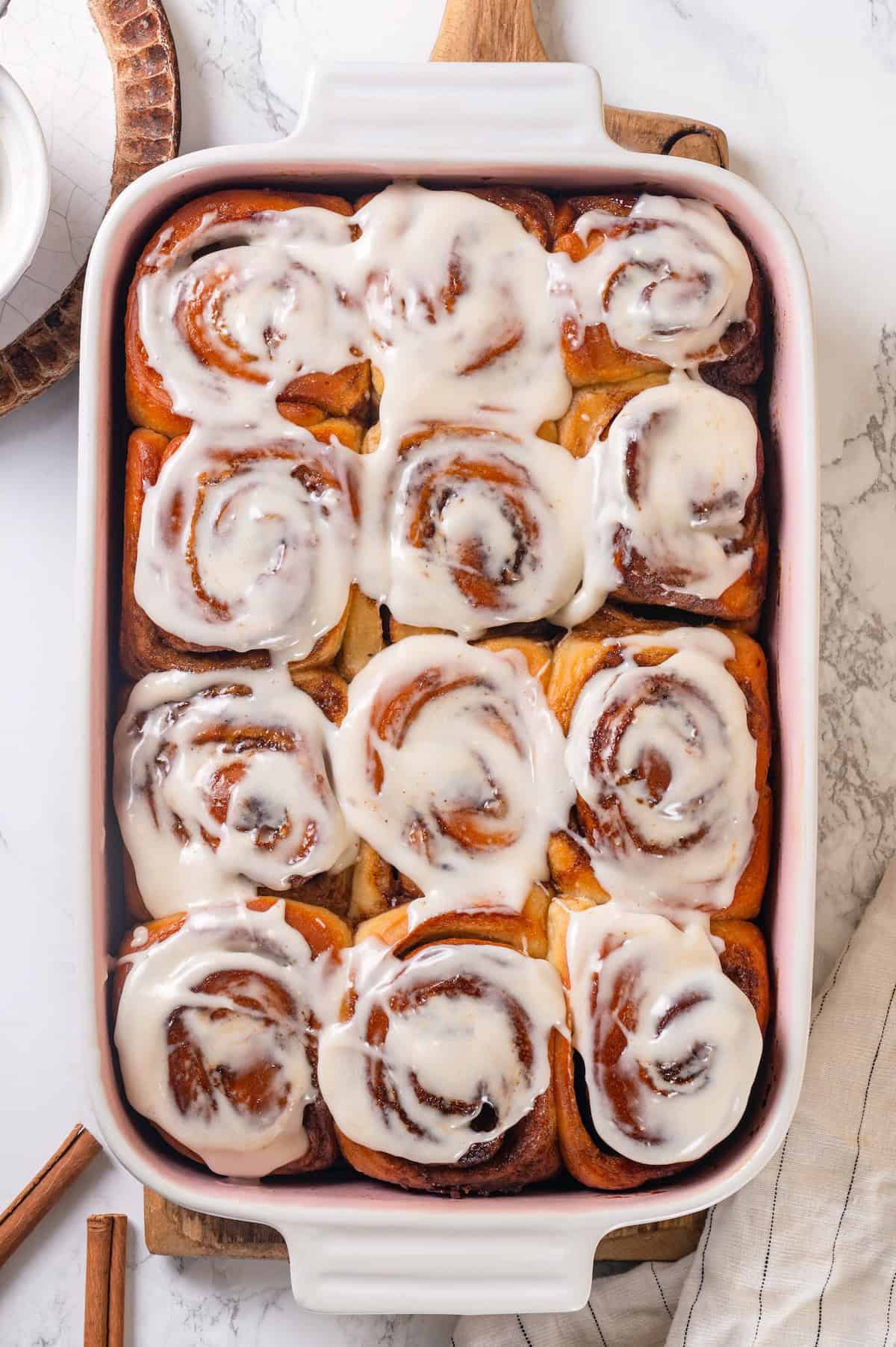
They’re soft, gooey, and doused in this glorious vegan cream cheese glaze that’s so smooth and creamy with just the right balance of tangy and sweet. Serve them with your favourite coffee or a Dirty Chai Latte. Sunday brunch has never tasted so good.
Bakery-Style Sourdough Cinnamon Rolls You Can Make at Home
I can’t get enough of these vegan sourdough cinnamon rolls. Here’s why:
- As a vegan, certain baked goods are often off-limits. This recipe puts the comforting magic of cinnamon rolls back on the menu. You even get that classic cream cheese frosting!
- Baking with sourdough starter is pretty fascinating. There’s no yeast involved. The rise is entirely thanks to the starter’s natural fermentation process.
- The dough needs to ferment overnight, which makes this recipe easy to break into manageable steps. It’s perfect for slow weekend baking.
Notes on Ingredients
Ready to get started? Here’s what you’ll need to make these sourdough cinnamon rolls. See the recipe card below for precise measurements.
Dough:
- Unsweetened plant milk – Soy milk is a great option for a richer flavour, but any unsweetened plant milk will work.
- Coconut cream – Just a splash. This helps add softness and richness to the dough without making it overly sweet.
- Active sourdough starter* – See the section below titled “Preparing a Sourdough Starter” for instructions on how to activate your starter.
- Olive oil – Refined coconut oil or melted vegan butter would also work.
- High-gluten flour – Aim for a protein content of 11–13%. This will help build a stronger gluten structure. That structure helps retain the gases created during fermentation for a softer, airier texture.
- Granulated sugar – To enhance the fermentation process.
- Fine sea salt – Table salt will also do the trick.
*A sourdough starter is quite simple to make with flour and water. Instructions are a quick Google away. You could also ask a friend to borrow his/her’s. Starters naturally multiply during feedings, so those with existing starters are often happy to give some away.
Filling:
- Vegan butter – Softened at room temperature. You can use store-bought vegan butter or make your own.
- Brown sugar – I love the rich, molasses-like flavour of brown sugar. Light or dark brown sugar will work equally well. It just depends on your taste preferences.
- Ground cinnamon – If you want to sprinkle in a little nutmeg too, go for it.
Cream Cheese Glaze:
- Vegan cream cheese – Softened at room temperature (for easier mixing). I have a great vegan cream cheese recipe you can use, or you can grab some from the store.
- Powdered sugar – Don’t try to use a different sugar here. Your glaze will come out gritty.
- Vanilla extract – To deepen the flavour profile.
- Vegan butter – Softened. Use my vegan butter recipe or something from the store.
Preparing a Sourdough Starter
Before beginning any sourdough baking project, you’ve got to wake your starter up! Here’s how:
- Mix. In a jar, mix together 2 tablespoons sourdough starter (30g) with 1/2 cup all-purpose flour (60g) and 1/4 cup water (60ml) until smooth.
- Rest. Cover the jar and let it sit at room temperature for 4-8 hours. It should double in size and appear bubbly with a slightly domed top.
It’s SO important to get this step right. A strong, active sourdough starter is key to soft, well-risen cinnamon rolls. If the starter is weak or underfed, the dough will rise too slowly. This will result in dense rolls, rather than light and fluffy ones.
How to Make Vegan Sourdough Cinnamon Rolls From Scratch
Ready. Stet. Bake! Here’s how to make these gooey, comforting cinnamon buns. Please see the recipe card below for more thorough instructions.
Make the dough:
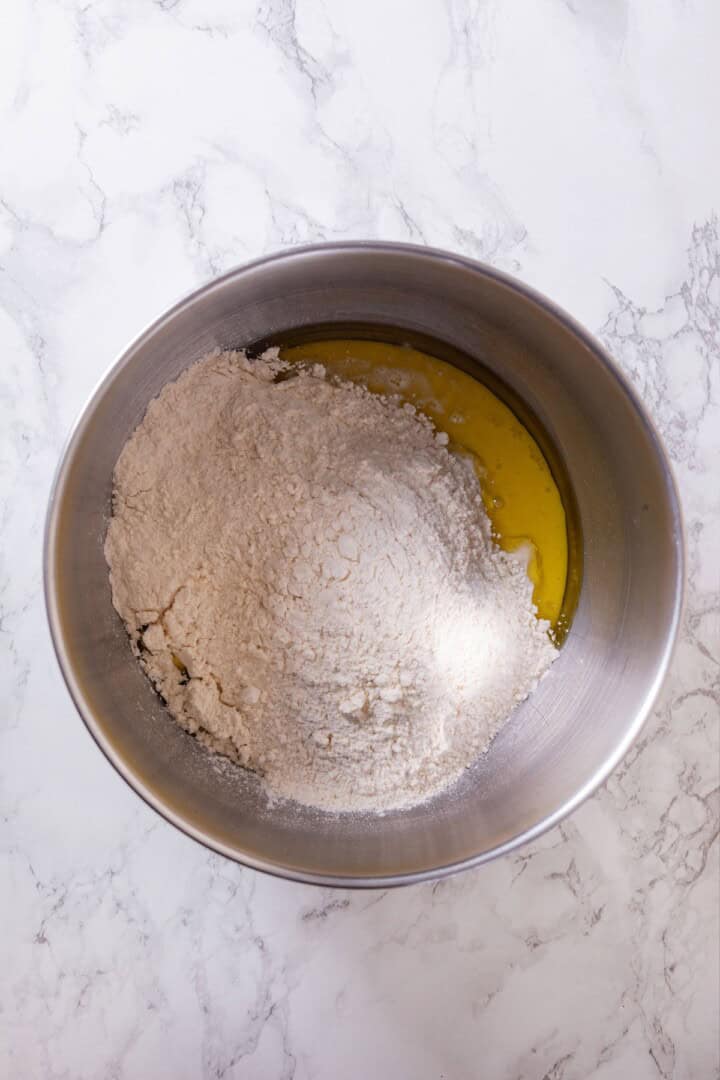
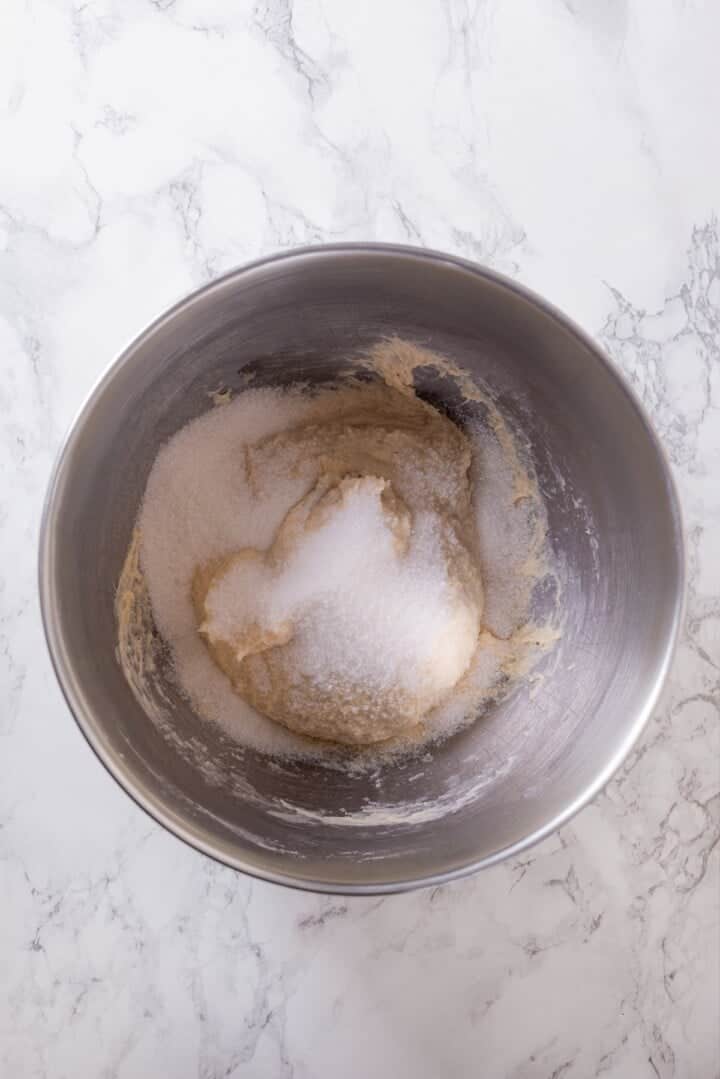
- Mix the dough. In a stand mixer fitted with a dough hook, mix together the plant milk, coconut cream, active sourdough starter, olive oil, and flour on medium speed for 2 minutes. Add the sugar and salt and mix for 2 more minutes.
- Rest, mix, rest. Cover and rest the dough for 30 minutes. Mix for 2–3 minutes. Cover and rest for 40 minutes.
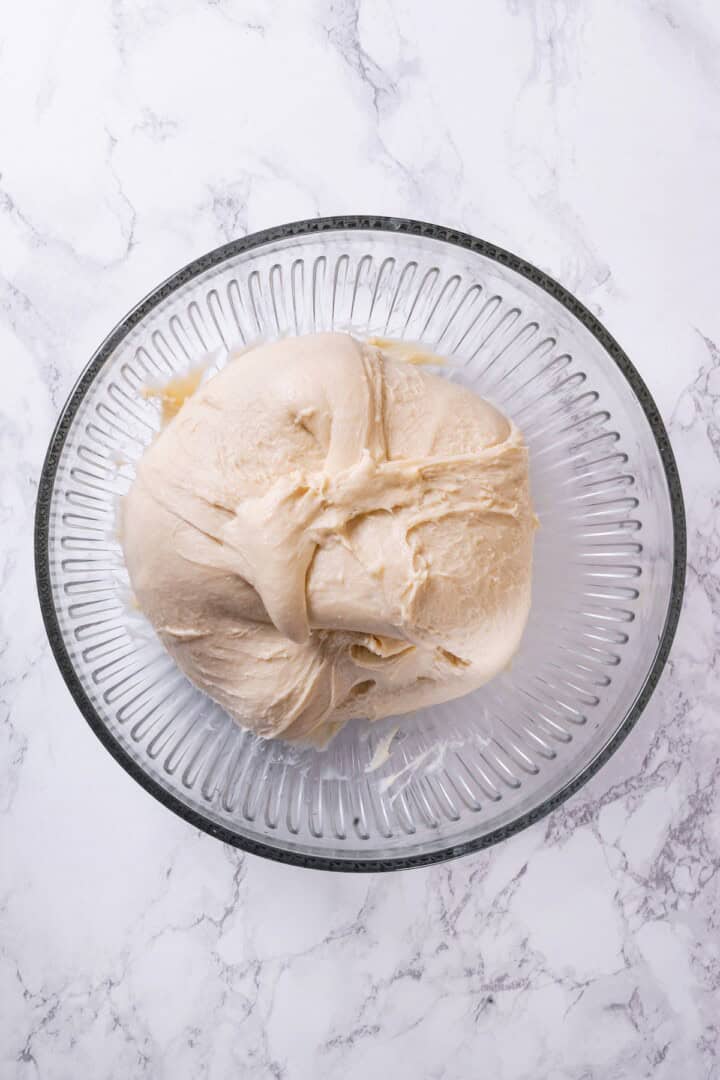
- Stretch and fold. With damp hands, stretch one side of the dough up and over toward the centre. Repeat on all four sides. Rest for 40 minutes and repeat.
- Rest. Cover and rest for 1 1/2 hours until puffy.
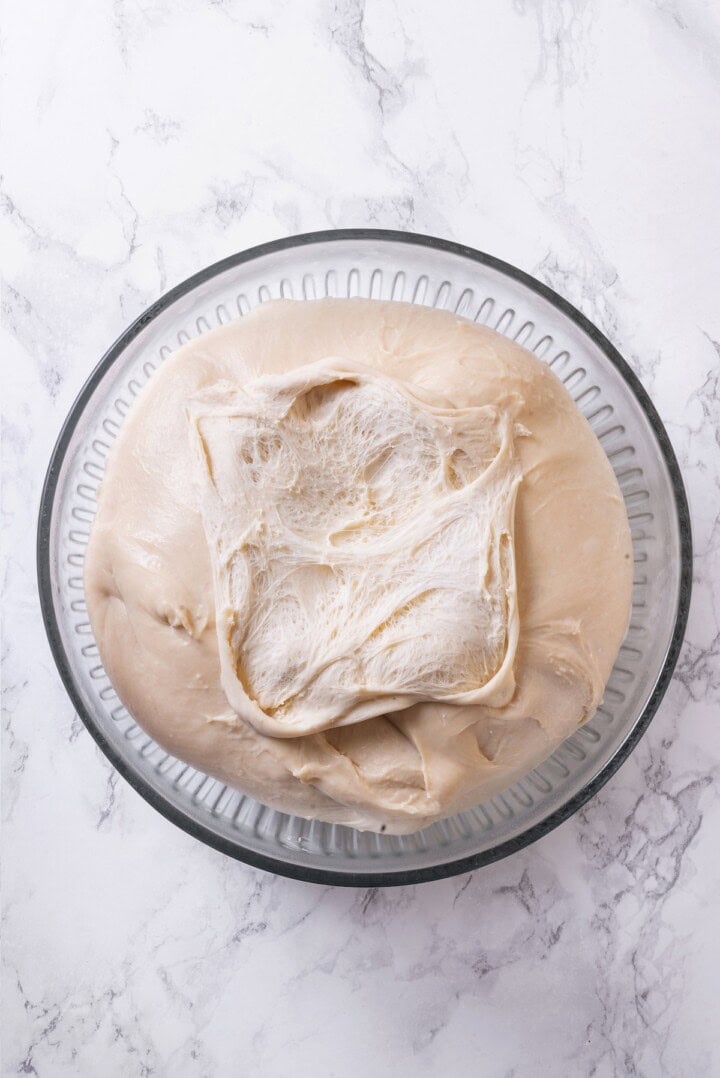
- Bulk fermentation. Let the covered dough rest in the fridge for 12–18 hours until puffy and airy. When gently stretched, it should show thin web-like strands and small air pockets.
Roll, fill, cut, and proof:
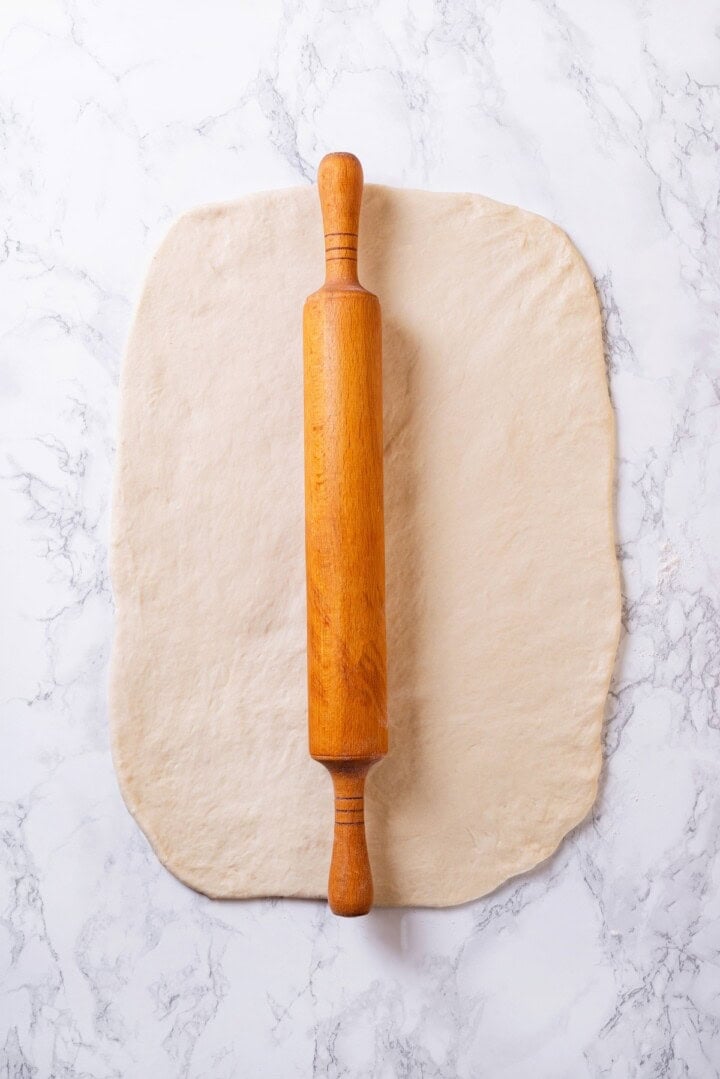
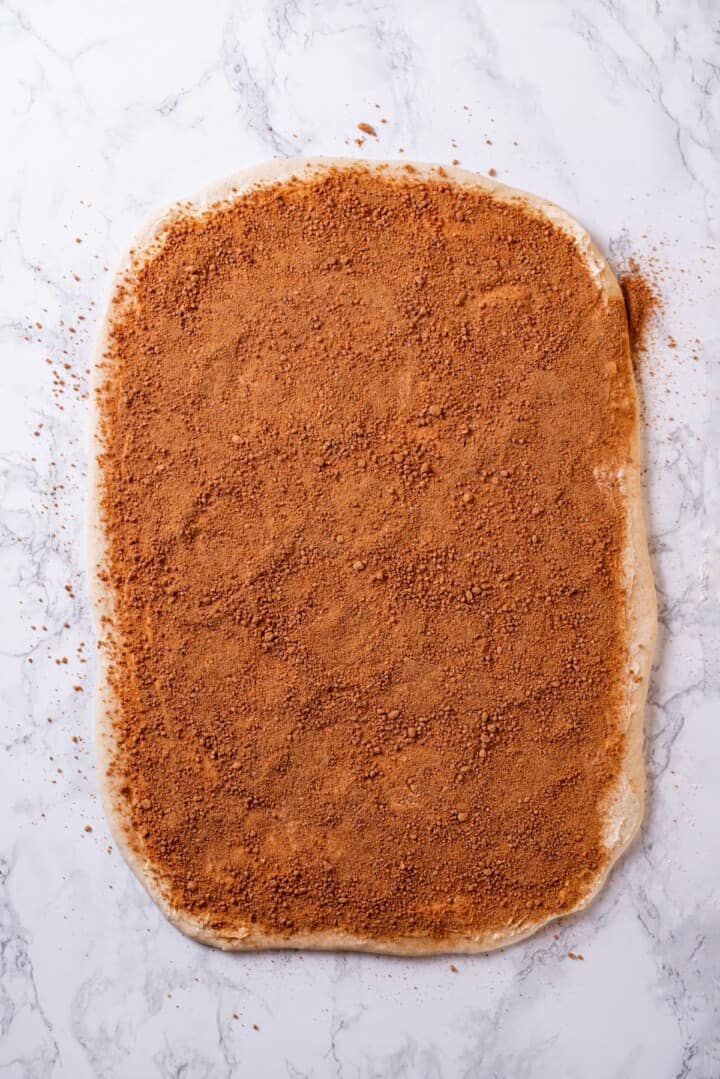
- Roll. Turn the dough out onto a lightly floured work surface and roll into an 18 x 12 inch (45 x 30 cm) rectangle.
- Fill. Spread the softened vegan butter over the dough, leaving a small border. Mix together the brown sugar and cinnamon and sprinkle over the buttered dough.
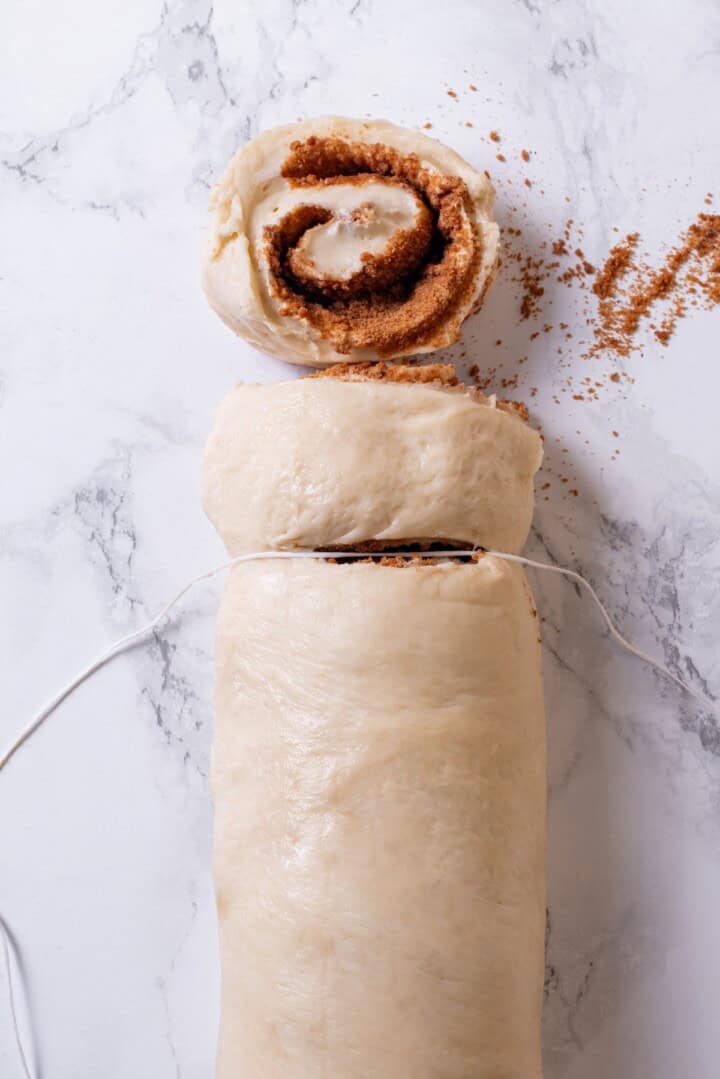
- Roll. Starting from the long side, roll the dough into a tight log.
- Cut. Cut the log into 12 equal pieces with a sharp knife or unflavoured dental floss.
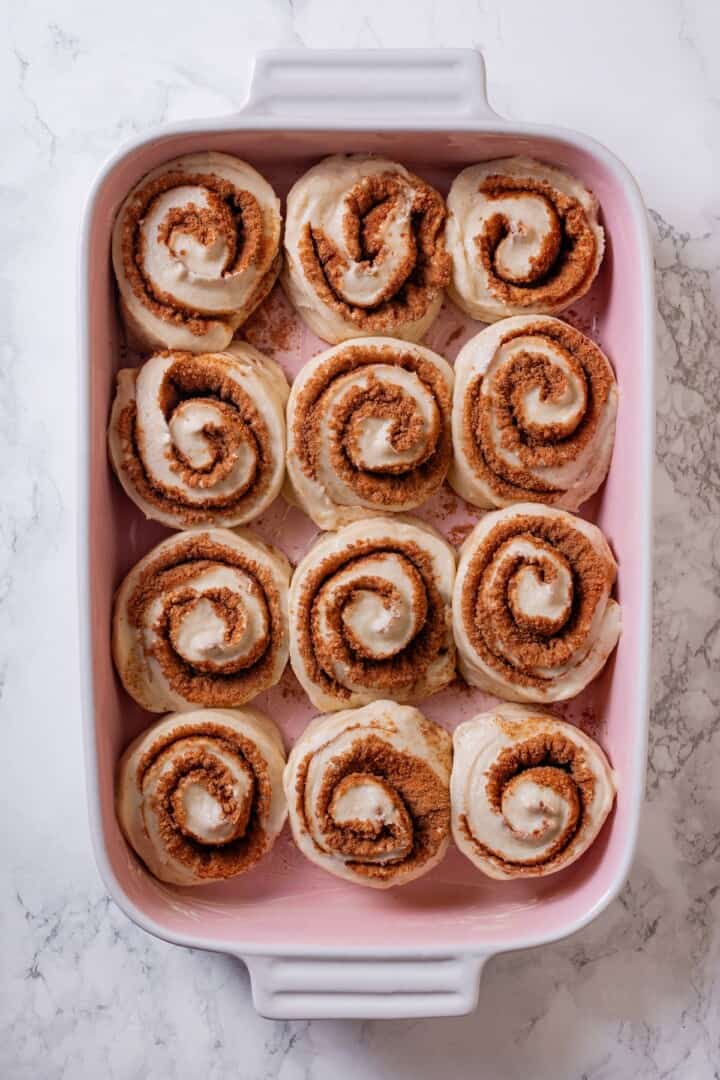
- Final proof. Arrange the rolls in a lightly greased 9×13-inch (23 x 33 cm) baking pan, leaving a little space between them. Cover with a towel and let rise at room temperature for 2–3 hours.
Bake and glaze:
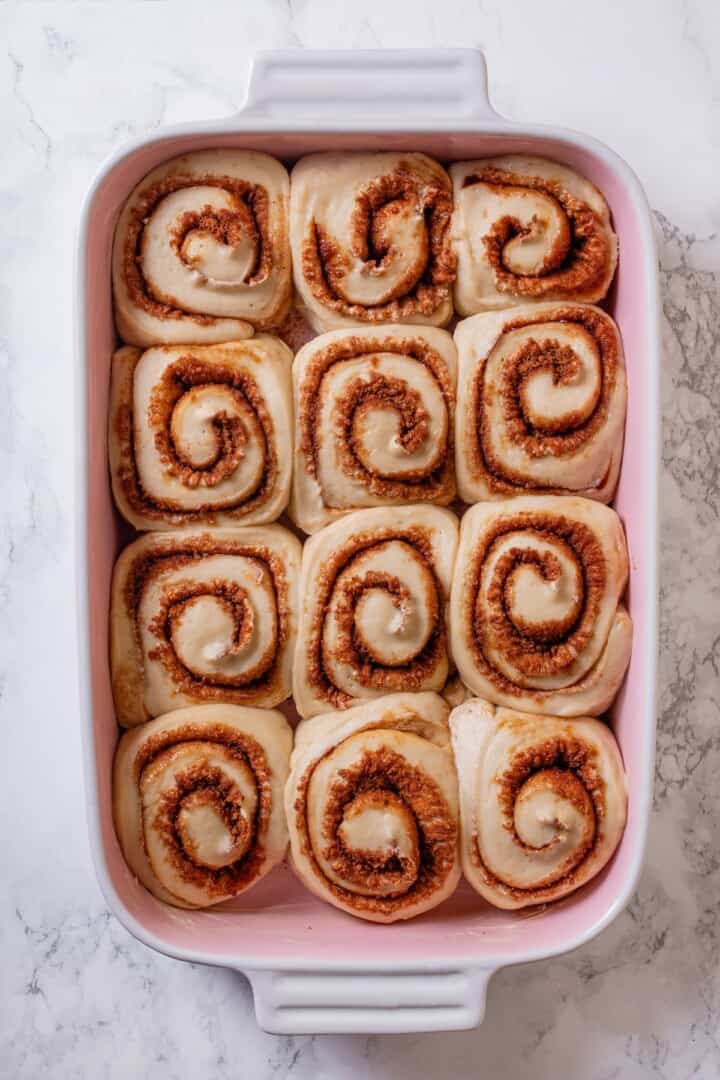
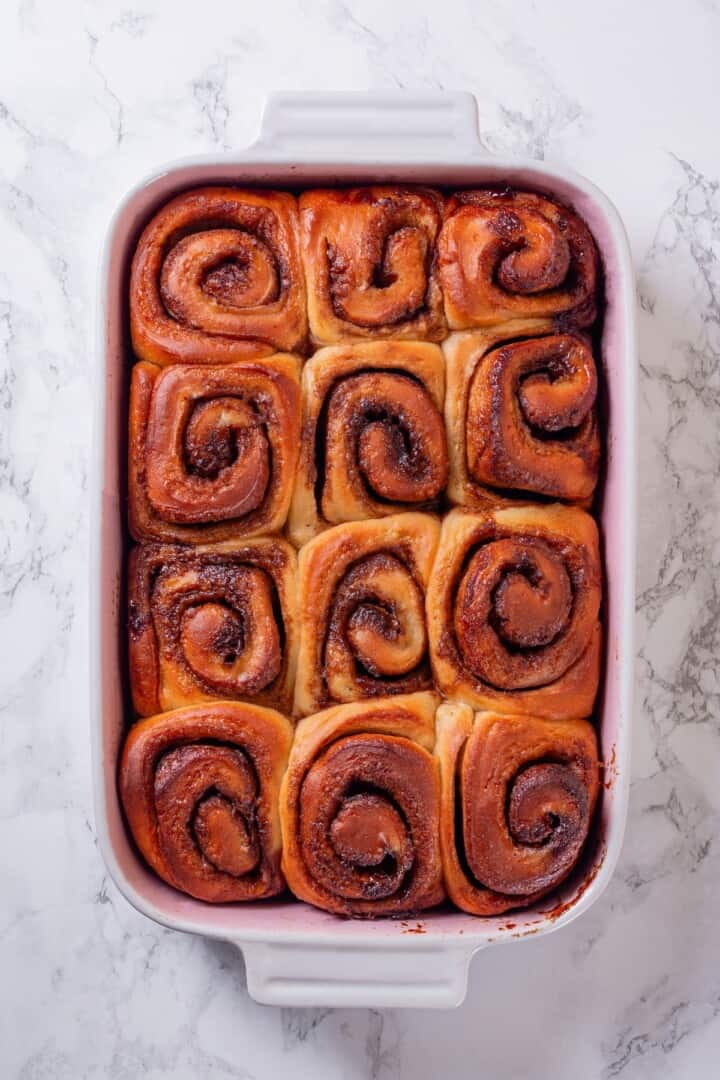
- Bake. Preheat the oven to 350°F (175°C) and bake the cinnamon rolls for 30 minutes.
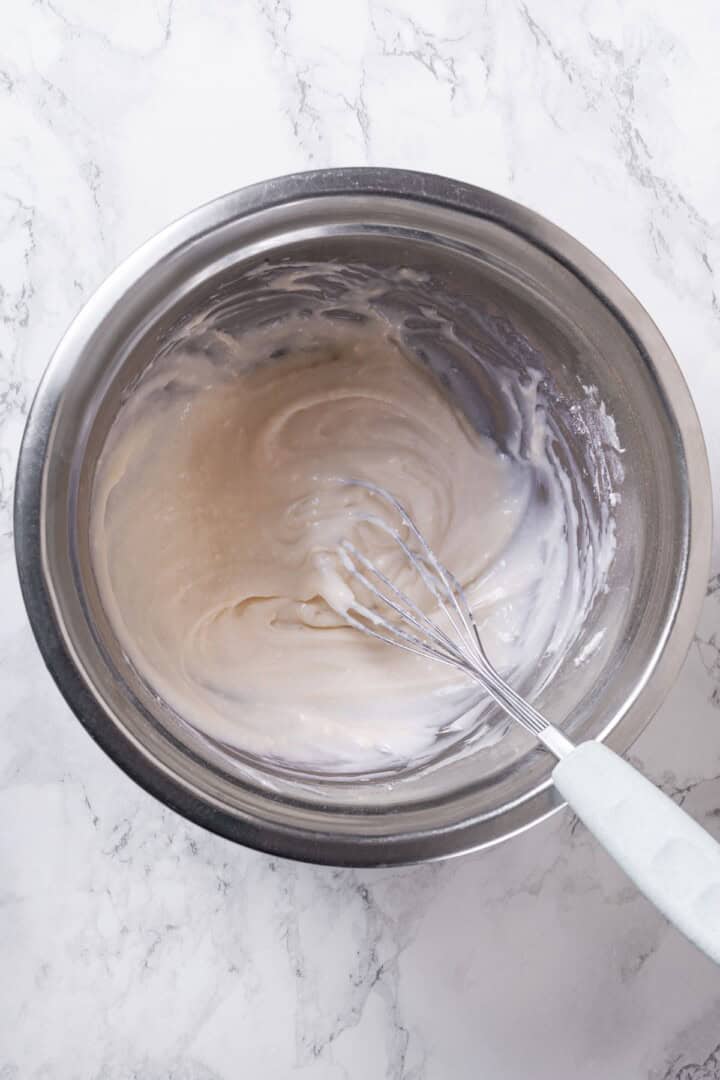

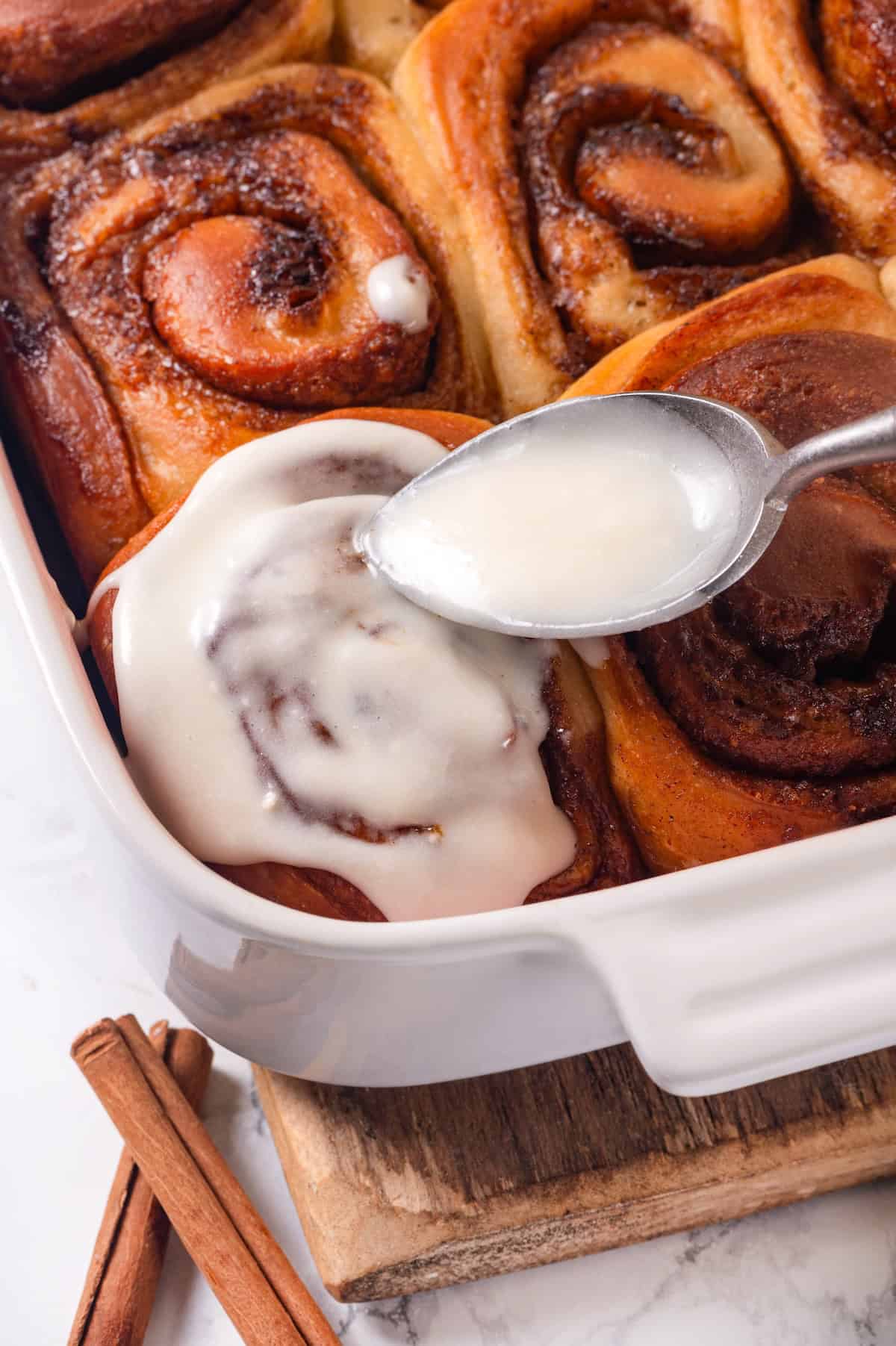
- Make the glaze. Whisk together the vegan cream cheese, powdered sugar, vanilla, and vegan butter until smooth.
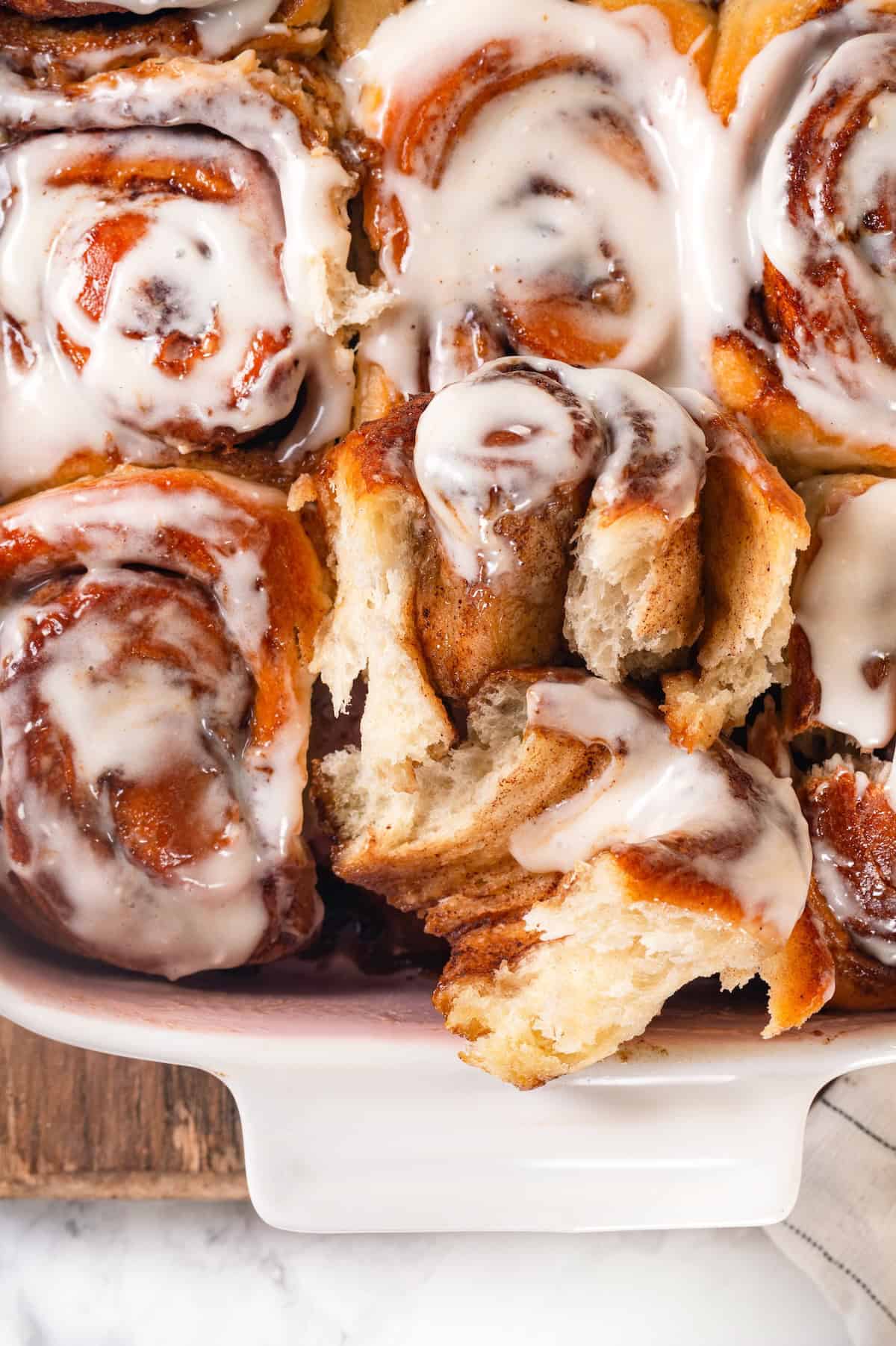
- Finish. Let the cinnamon rolls cool for 10–15 minutes, then spread the glaze over the top.
Tips for Perfect Cinnamon Buns
Here are some tips and tricks to keep in mind as you work through this sourdough cinnamon roll recipe:
- Weigh everything. Baking (especially with sourdough) is a science. Weigh everything out using a food scale for the best results.
- Be patient with the starter. Give the sourdough starter 4-8 hours to bubble up and activate. If you cut this time short, your rolls won’t rise properly.
- Make the dough easier to work with. That initial rest after kneading the dough gives the flour time to hydrate. And the cold fermentation firms up the dough. Combined, these two steps make the dough easier to work with. Don’t skip them.
- Even thickness. When rolling the dough into a rectangle, aim for even thickness for even baking.
- Dental floss hack. Using unflavoured dental floss to cut the rolls helps keep them from squishing.
- Notes on the final rise. For that final rise, let the rolls sit until they are noticeably puffy, soft, and slightly springy to the touch. These visual and tactile signs are more telling than your timer.
- Tent. Keep an eye on the cinnamon buns. If they start to brown too quickly, tent them with aluminium foil.
- Glaze while warm. You’ll want to glaze these rolls 10-15 minutes after they come out of the oven. The warmth will help the glaze spread more evenly.
Easy Variations
Want to mix things up a bit? Here are a few fun variations to consider:
- Orange cinnamon rolls. You know, like the Pillsbury ones? Just add a tablespoon or so of fresh orange zest (6g) to the dough. Then, swap the vanilla extract in the glaze for fresh orange juice and a smidge more orange zest.
- Cinnamon-raisin. If you like raisins in your cinnamon rolls, sprinkle a couple of handfuls over the filling before rolling the dough into a log.
- Sticky pecan. This is a real treat. Mix some candied pecans into my Vegan Caramel Sauce. Line the baking sheet with parchment paper and spread the mixture over the bottom. Arrange the rolls on top before the final proof and bake as usual. When the rolls come out of the oven, carefully flip them onto a baking tray so the sticky pecan mixture is on top.
How to Store Cinnamon Rolls
- Refrigerator: Seal any fully cooled cinnamon rolls in an airtight container and store them in the fridge. They’ll keep for up to 4 days.
- Freezer: Need a little more time? Seal the fully cooled leftover rolls in a freezer-safe airtight container and store them in the freezer for up to 3 months. Thaw in the fridge before reheating.
- To reheat: Arrange the rolls on a baking sheet and cover with aluminium foil. Bake at 350°F (175°C) for 5-10 minutes or until heated through. You can also microwave a cinnamon bun in 30-second intervals until warm.

More Breakfast Recipes
Looking for more breakfast inspo? I’ve got tons of vegan-friendly recipes to help you kick your day off right:
- Make Ahead Vegan Breakfast Sandwich
- Vegan Breakfast Burritos
- Vegan Waffles
- Banana Bread Overnight Oats
- Coconut Kiwi Green Smoothie Bowl
Enjoy friends! If you make these sourdough cinnamon rolls, please snap a photo and tag #jessicainthekitchen on Instagram! We’d also love it if you would leave a comment below, and give the recipe a rating! Thanks so much!

Sourdough Cinnamon Rolls
Ingredients
Dough:
- 1 cup unsweetened plant milk, 240ml
- 3 tablespoons coconut cream, 50g
- 1/2 cup active sourdough starter, 150g
- 4 tablespoons olive oil, 60ml
- 3 cups plus 3 tablespoons high gluten flour, 400g
- 1/4 cup granulated sugar, 50g
- 1 teaspoon fine sea salt, slightly heaped, 7g
Filling:
- 5 tablespoons vegan butter, softened, 70g
- 1 cup brown sugar, 200g
- 2 teaspoons ground cinnamon, 5g
Cream Cheese Glaze:
- 2 ounces vegan cream cheese, softened, 55g
- 3/4 cup powdered sugar, 90g
- 1 teaspoon vanilla extract, 5ml
- 2 tablespoons vegan butter, softened, 28g
Instructions
Prepare the active sourdough starter:
- Mix. In a jar, mix 2 tablespoons sourdough starter (30g) with 1/2 cup all-purpose flour (60g) and 1/4 cup water (60ml). Stir until smooth.
- Ferment. Cover loosely and let sit at room temperature for 4-8 hours, until doubled, bubbly, and slightly domed on top.
Make the dough:
- Mix the dough. Add the plant milk, coconut cream, active sourdough starter, olive oil, and flour to the bowl of a stand mixer fitted with the dough hook. Mix on medium speed for 2 minutes, until a rough shaggy dough forms.
- Sweeten. Add the granulated sugar and salt. Mix again on medium speed for 2 more minutes, until the dough looks more cohesive and starts pulling together around the hook.
- Rest. Cover the bowl and let the dough rest for 30 minutes. This rest helps the flour hydrate fully and makes the dough easier to work with later.
- Mix. Mix the dough again on medium speed for 2-3 minutes to strengthen it further.
- Rest. Cover the bowl and let the dough rest for 40 minutes.
Stretch and fold:
- Stretch and fold. With lightly wet hands, grab one side of the dough, stretch it upward, and fold it over toward the centre. Turn the bowl and repeat on all four sides.
- Stretch and fold again. Cover and rest for another 40 minutes, then repeat the stretch and fold one more time. After the second fold, the dough should feel smoother, stronger, and more elastic.
Bulk fermentation:
- Rest. Cover the bowl and let the dough sit at room temperature for about 1 1/2 hours. It won’t double, but it should look slightly puffier.
- Cold ferment. Transfer the covered dough to the refrigerator and let it cold ferment overnight, about 12-18 hours.
- Check the dough the next day. The chilled dough should look puffed and airy. When gently stretched, it should show thin web-like strands and small air pockets. This is a good sign that the gluten has developed and the dough has fermented properly.
Roll, fill, cut, and proof:
- Roll. Lightly flour your work surface. Turn the cold dough out onto it and gently press it into a rectangle. Roll the dough into a rectangle about 18×12 inches (45x30cm). Try to keep the thickness even so the rolls bake evenly.
- Fill. Spread the softened vegan butter evenly over the surface of the dough, leaving a small border around the edges. In a small bowl, mix together the brown sugar and cinnamon. Sprinkle this mixture evenly over the buttered dough.
- Roll. Starting from the long side, roll the dough up tightly into a log. Roll slowly and evenly so the filling stays in place.
- Cut the rolls. Cut the log into 12 equal pieces. A sharp knife works, but unflavoured dental floss or thread often gives the cleanest cuts without squishing the rolls.
- Final proof. Lightly grease a 9×13 inch (23x33cm) baking pan with a little oil or vegan butter.
- Rise. Arrange the rolls in the pan, leaving a little space between them. Cover with a towel and let them rise at room temperature for 2-3 hours, or until noticeably puffy and expanded.
Bake and glaze:
- Preheat the oven. Preheat the oven to 350°F (175°C).
- Bake. Bake the cinnamon rolls for about 30 minutes, until golden on top and baked through in the centre. If they brown too quickly, loosely cover the pan with foil for the last part of baking.
- Make the glaze. While the rolls cool slightly, add the softened vegan cream cheese, powdered sugar, vanilla extract and softened vegan butter to a bowl. Whisk until smooth and creamy.
- Finish. Let the cinnamon rolls cool for about 10-15 minutes so they are still warm but not piping hot. Spread the glaze over the warm rolls and serve.
Notes
- Weigh everything. Weigh all of your ingredients for the best results.
- Be patient. For soft, fluffy rolls, give the sourdough starter 12-18 hours to bubble up and activate.
- Trust your eyes. Visual signs are more telling than the timer when you’re trying to assess whether your dough has risen enough. Look for puffy, soft, airy dough.
- Even thickness. When rolling the dough into a rectangle, aim for even thickness for even baking.
- Tent. Keep an eye on the rolls. If they start to brown too quickly, tent them with aluminium foil.
- Storage. Store any fully cooled leftovers in an airtight container in the fridge for up to 5 days or in the freezer for up to 3 months. You can reheat them in the oven at 350°F for 5-10 minutes (covered) or pop them in the microwave for 30 seconds.
Disclaimer: Although jessicainthekitchen.com attempts to provide accurate nutritional information, kindly note that these are only estimates. Nutritional information may be affected based on the product type, the brand that was purchased, and in other unforeseeable ways. Jessicainthekitchen.com will not be held liable for any loss or damage resulting for your reliance on nutritional information. If you need to follow a specific caloric regimen, please consult your doctor first.