

Vegan German Pancakes
Puffy, light and tender, these German pancakes are everything you love about the traditional version, but made without the eggs or dairy.
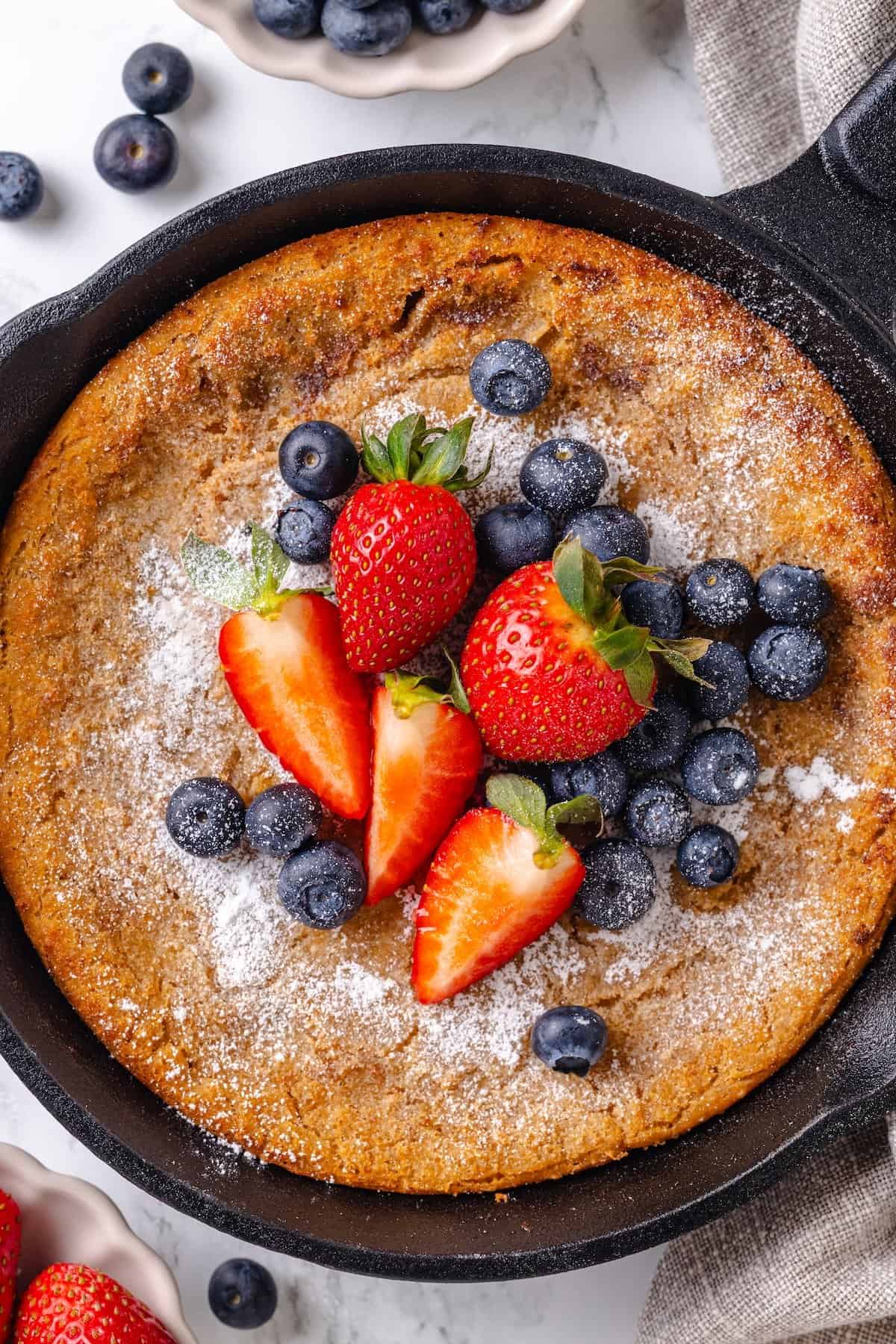
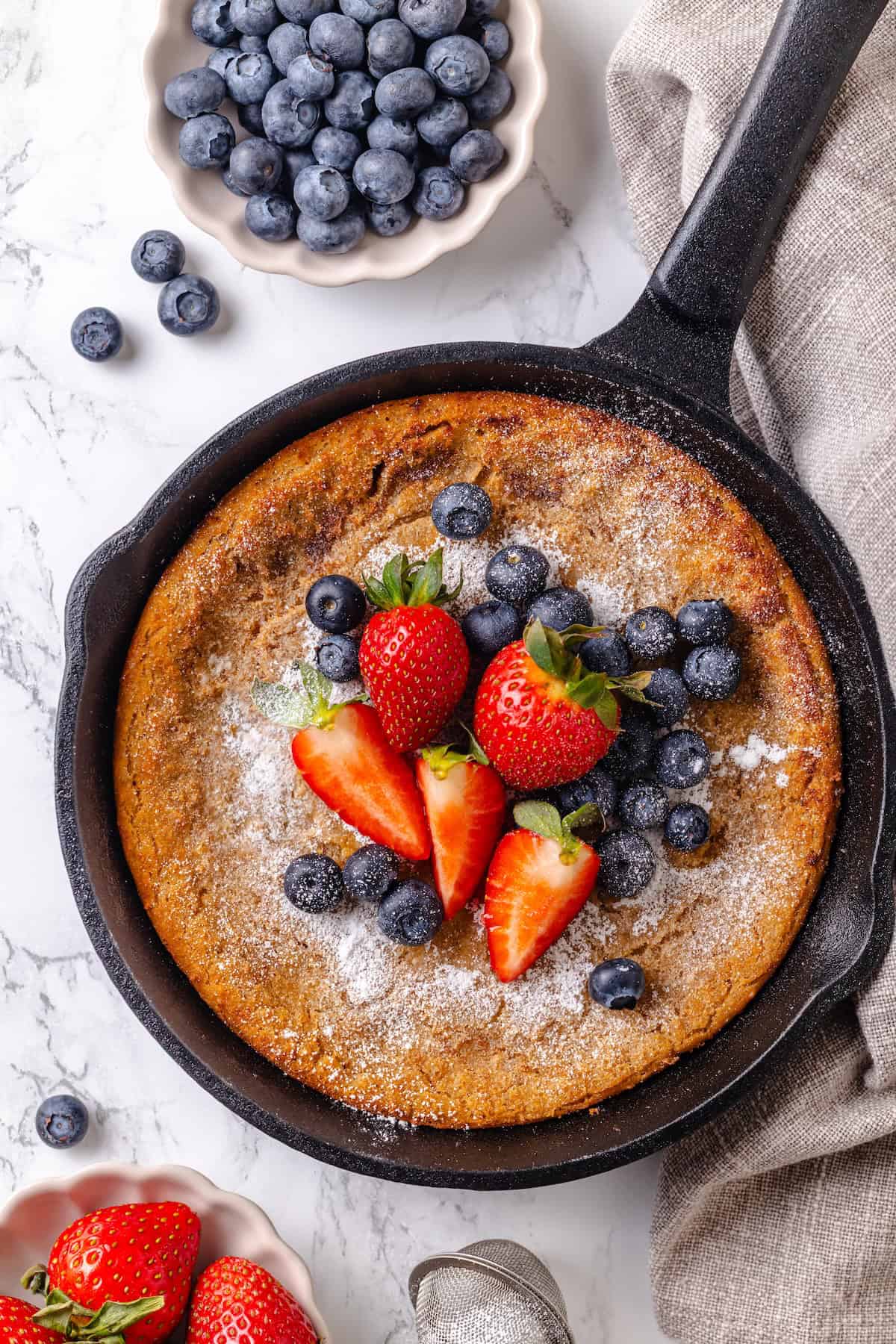
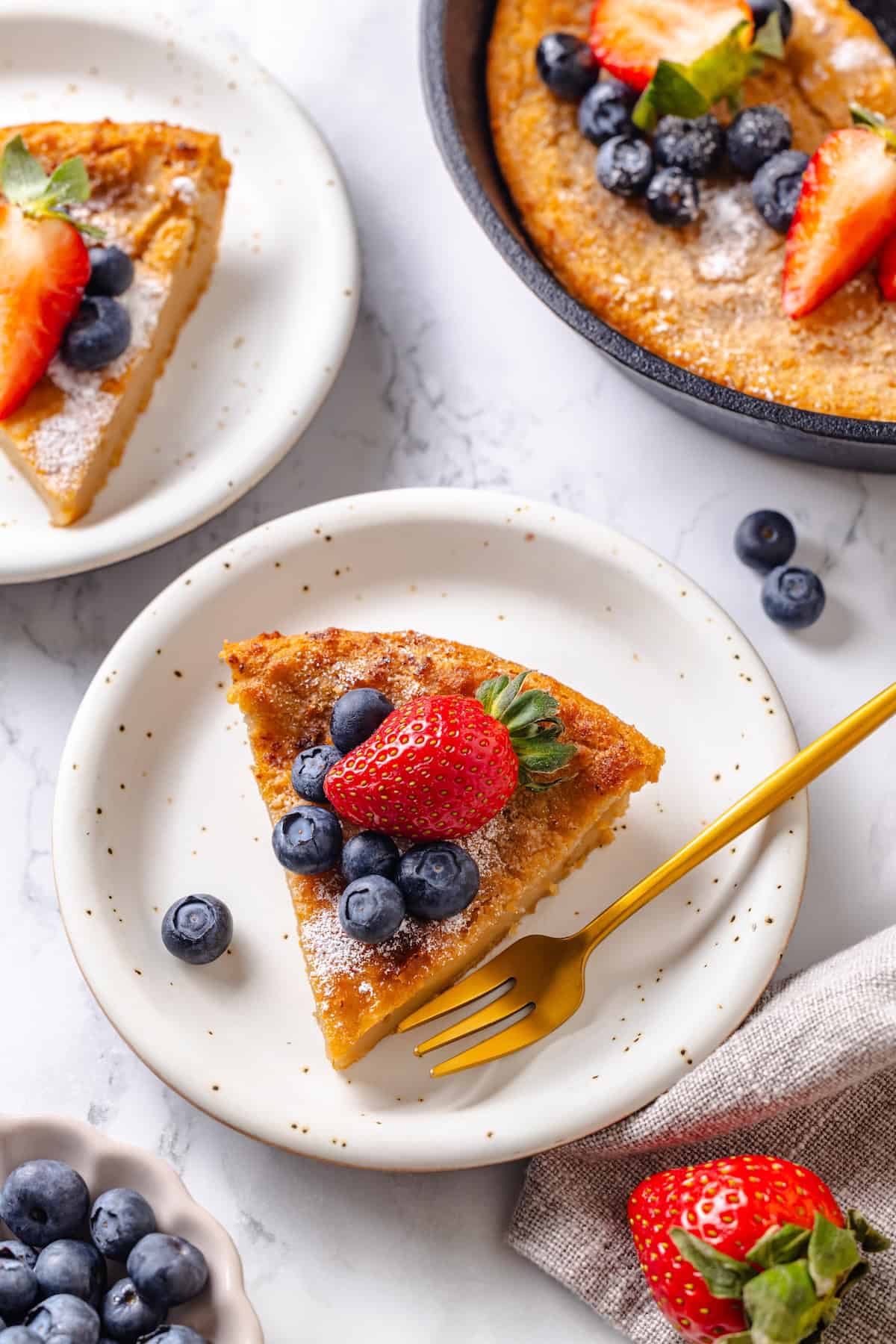
German pancakes are nothing like typical vegan pancakes. While they share a name, German pancakes are tender and custard-y in the middle, golden and crisp on the edges, and they puff up like magic in the oven—because yes, they are baked instead of cooked on the stovetop! Thanks to whipped aquafaba (which you’ll recognize from my aquafaba meringues!) and a hot skillet, you still get that signature puffiness, but you don’t need eggs to achieve it. Slice this giant pancake and serve with your favourite toppings!
What Makes German Pancakes a Special Breakfast
This is not the kind of pancake you can meal prep, but it is a breakfast that’s made for slow weekend mornings and special occasions. Here’s why you’re going to love this recipe.
- That dramatic rise. The fun thing about German pancakes is that they puff up in the oven kind of like a soufflé. They do sink back down into the pan as they cool, but turn on your oven light so you don’t miss the show!
- No store-bought egg substitutes needed. Egg substitutes can be expensive and hard to find at grocery stores, but this recipe uses aquafaba, AKA the liquid from a can of chickpeas. (Save those chickpeas and make vegan chickpea tuna salad for lunch!)
- Irresistible texture. German pancakes have golden edges with a soft centre that’s a little like a thicker version of a crepe. Where traditional pancakes are fluffy, German pancakes are custard-like in the middle.
Notes on Ingredients
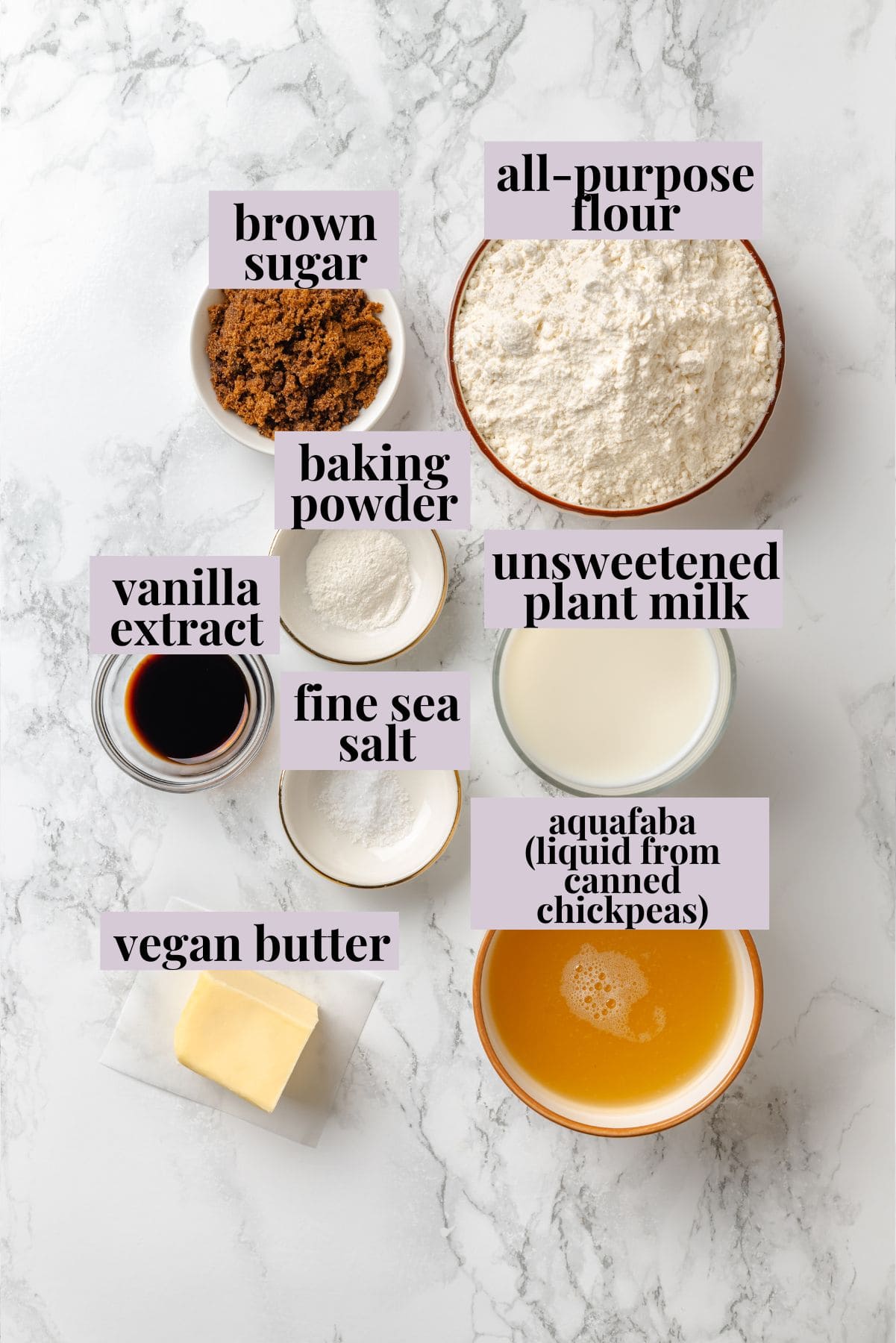
You don’t need very much for this vegan German pancake recipe! Scroll down to the recipe card to find the ingredient quantities and recipe instructions.
- Aquafaba – The liquid from canned chickpeas is the best vegan egg substitute for replicating the lift and airiness you get from eggs.
- Plant milk – Almond, soy, or oat milk all work well; choose one that’s unsweetened and unflavoured.
- Vanilla extract – Or switch things up with almond extract, which is fantastic in German pancakes!
- Brown sugar – You can use light or dark brown sugar.
- Fine sea salt
- All-purpose flour – Or a 1:1 gluten-free flour.
- Baking powder
- Vegan butter – I love using my homemade vegan butter recipe.
How to Make Vegan German Pancakes
This recipe is easy as can be! Here’s a step-by-step look at the process.
- Prepare. Preheat the oven to 425°F with an oven-safe skillet inside. (A cast iron skillet works best if you have one.)
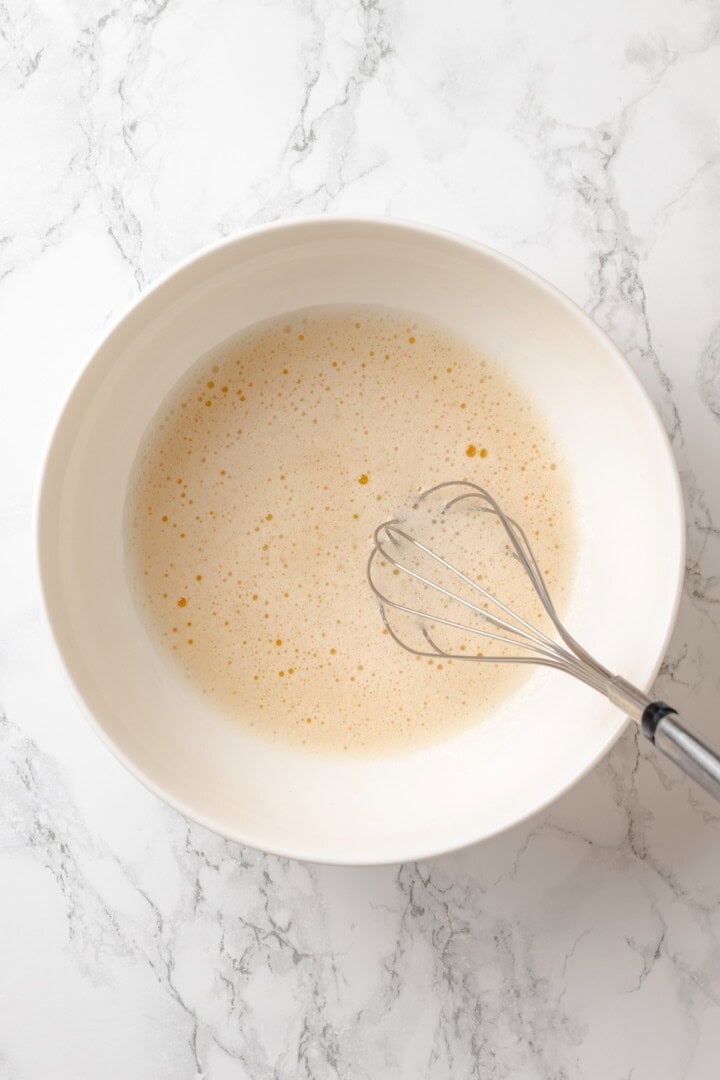
- Whip the aquafaba. Whisk or use a hand mixer to beat it until it’s lightly foamy.
- Add the next few ingredients. Whisk in the plant milk, vanilla, brown sugar, and salt.
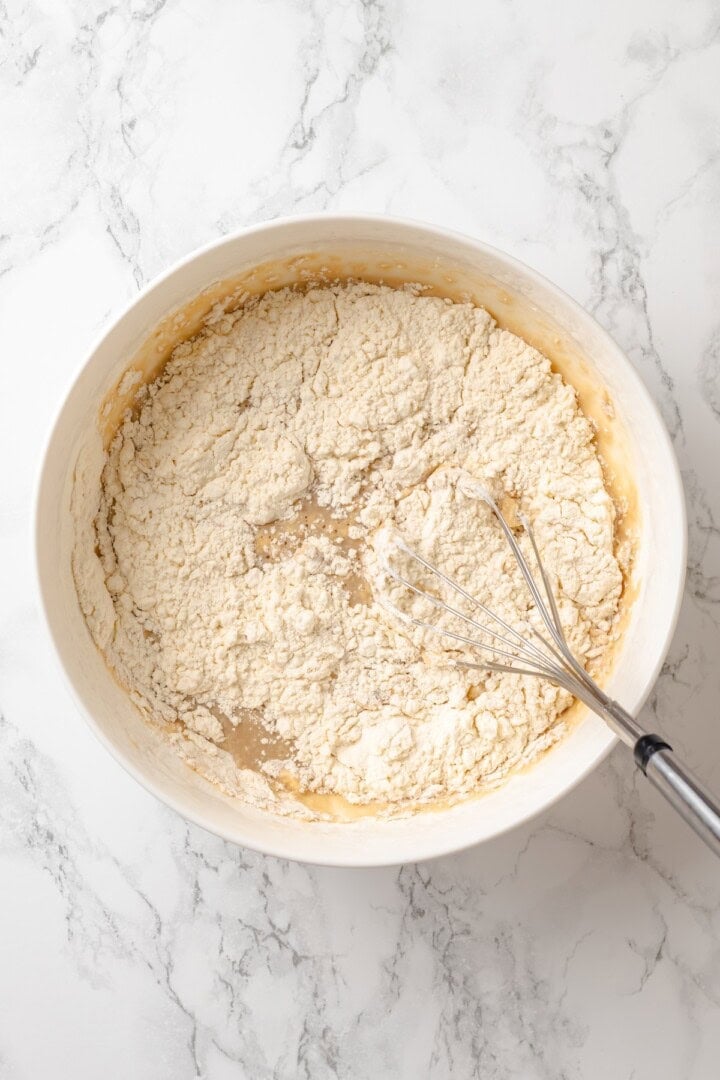
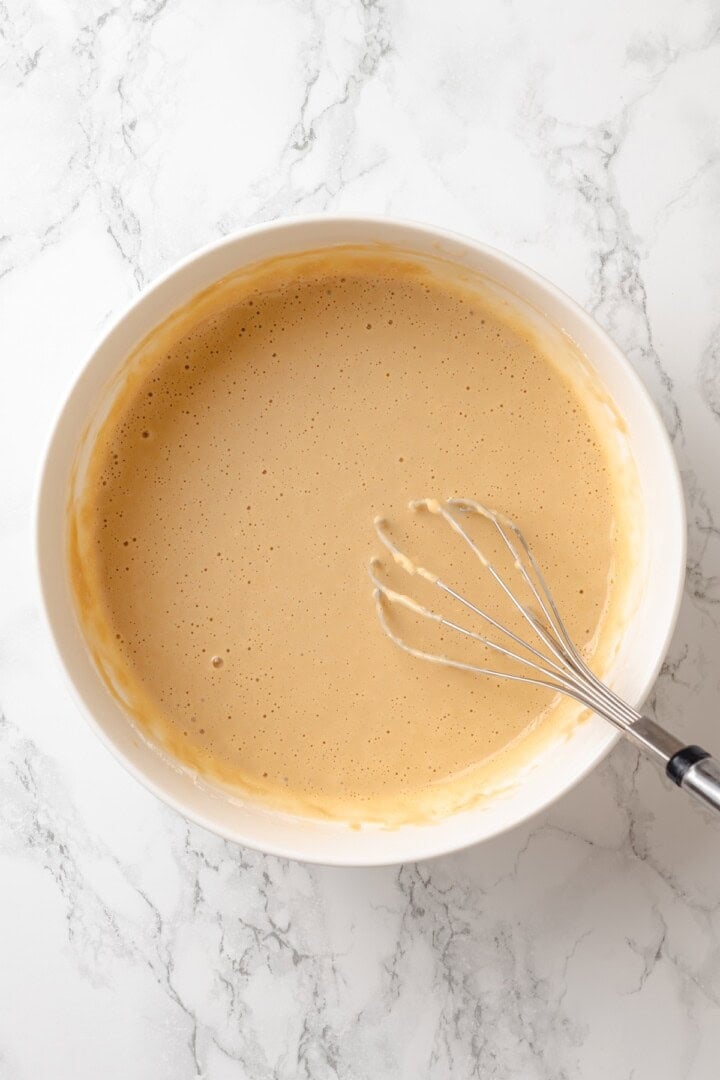
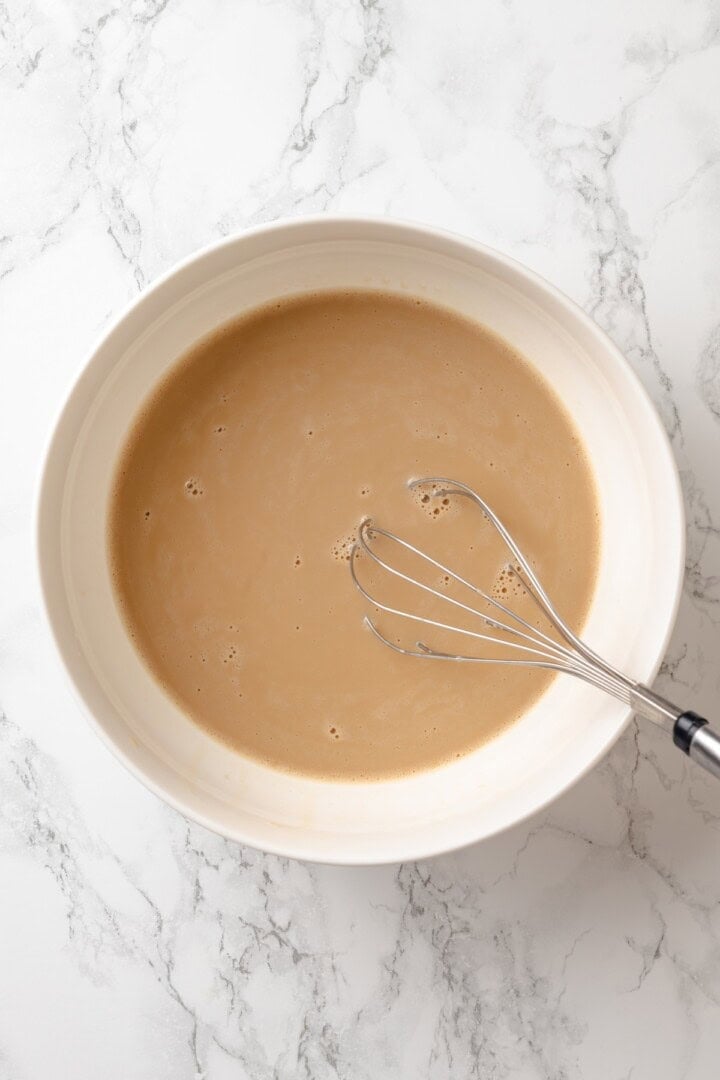
- Incorporate the dry ingredients. Whisk in the flour and baking powder until the batter is smooth and thin.
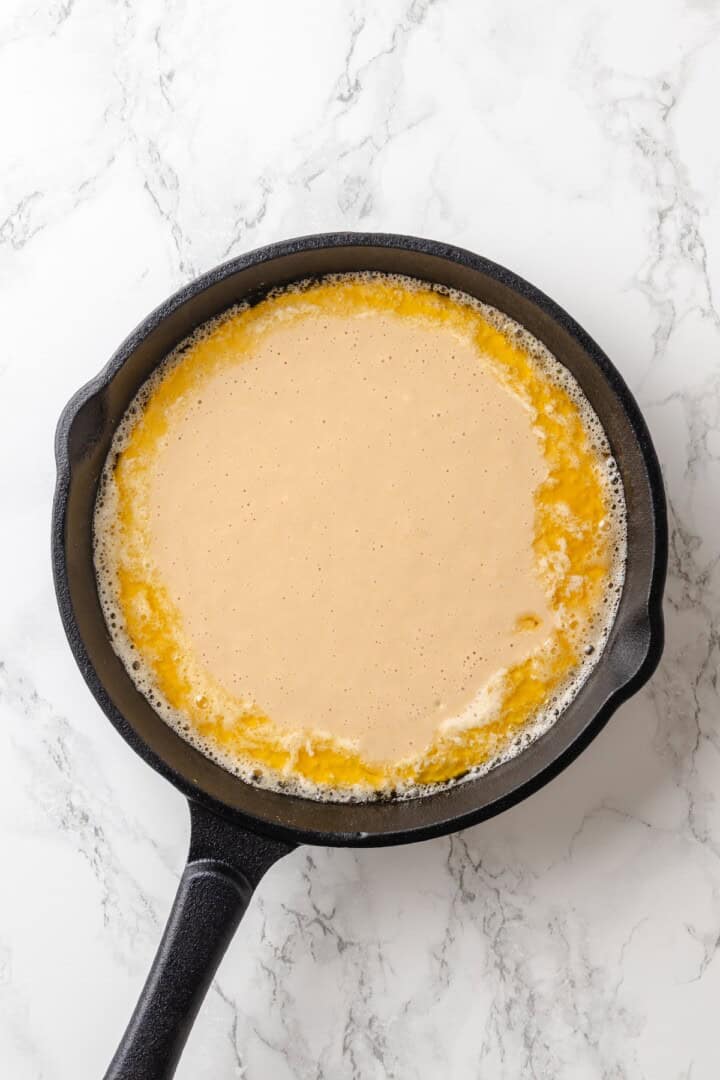
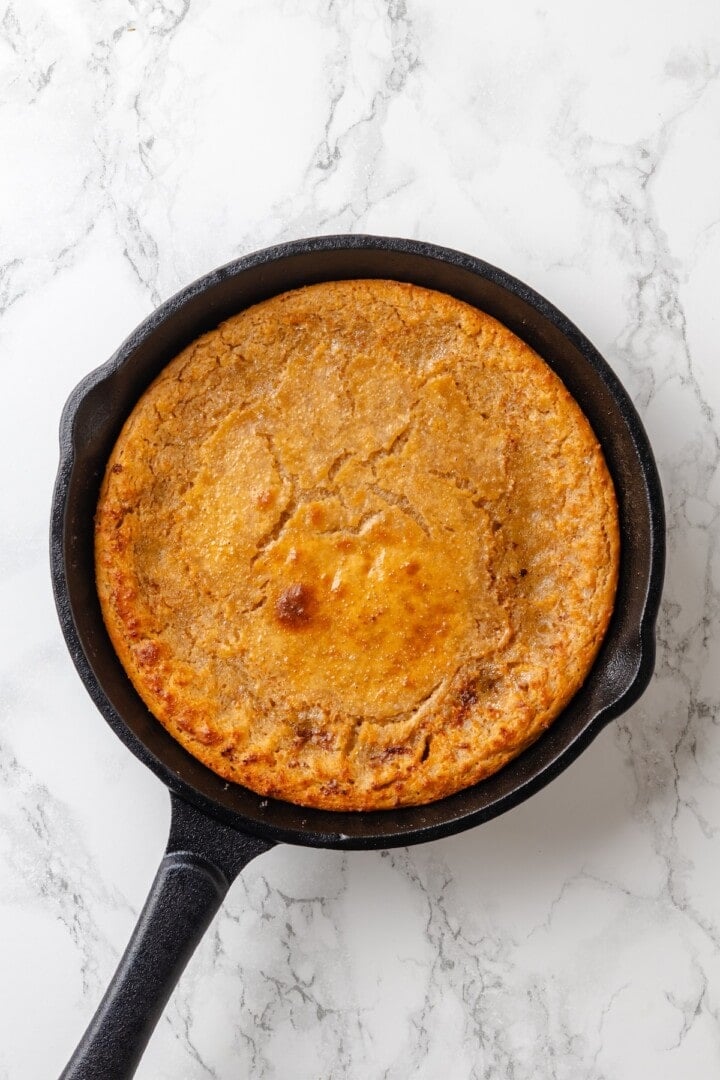
- Bake. Coat the hot skillet with vegan butter and swirl. Pour in the batter and bake for 20 to 22 minutes, or until puffed and golden. (If you’d like you can broil for 1 to 3 minutes at the end of the baking time for a darker top.)
- Serve immediately. Top with powdered sugar and fresh berries, then slice and serve.
Variations & Serving Suggestions
There are a lot of ways to switch things up with this German pancake recipe as the base. Here are a few more ideas!
- Make a savoury German pancake. Skip the sugar and vanilla. You can top it with roasted or sautéed veggies, and a scoop of vegan ricotta or shredded vegan cheese.
- Top it with apples. Saucy sautéed apples are another classic topping for German pancakes.
- Make it lemony. Another common way to top a German pancake is to sprinkle powdered sugar on top and then squeeze a lemon wedge over that. The sugar and lemon juice combine for a sweet-and-tangy topping.
- More topping ideas. Maple syrup, jams and preserves, fresh fruit, Nutella and bananas—there are endless options!
Storage and Reheating
- To store: German pancakes are best served immediately, but leftovers can be stored in the refrigerator for up to 2 days.
- To reheat: Warm in a 350°F oven or skillet until heated through. The microwave also works, but the texture will change.
More Vegan Pancake Recipes
Enjoy friends! If you make this vegan German pancake recipe, please snap a photo and tag #jessicainthekitchen on Instagram! We’d also love it if you would leave a comment below, and give the recipe a rating! Thanks so much!

Vegan German Pancake
Ingredients
- 1/2 cup aquafaba, liquid from canned chickpeas – 120mL
- 3/4 cup unsweetened plant milk, almond, soy, or oat – 180mL
- 1 teaspoon vanilla extract, 5mL
- 2 tablespoons brown sugar, 25g
- 1/4 teaspoon fine sea salt, 1.5g
- 1 1/4 cup all-purpose flour, 150g
- 1/2 teaspoon baking powder, 1g
- 2 tablespoons vegan butter, for the pan – 30mL
Instructions
- Preheat the oven to 425°F (220°C). Place a 9-inch oven-safe skillet inside the oven to heat while you prepare the batter.
- Pour the aquafaba into a mixing bowl and whisk vigorously by hand or with a hand mixer for about 30 seconds, just until lightly foamy.
- Whisk in the plant milk, vanilla extract, brown sugar, and salt until fully combined.
- Whisk in the flour and baking powder until you have a thin, smooth, lump-free batter. The consistency should resemble crêpe batter.
- Carefully remove the hot skillet from the oven. Add the vegan butter and swirl to coat the bottom and sides completely.
- Immediately pour the batter into the hot skillet. Return it to the oven and bake for 20-22 minutes, until puffed and lightly golden around the edges. For a more deeply golden and crispy finish, switch the oven to broil for the last 1–3 minutes. Keep the skillet on the middle rack and watch closely to prevent burning.
- Remove from the oven and serve immediately, dusted with powdered sugar and topped with fresh berries.
Notes
- To store: German pancakes are best served immediately, but leftovers can be stored in the refrigerator for up to 2 days.
- To reheat: Warm in a 350°F oven or skillet until heated through. The microwave also works, but the texture will change.
Disclaimer: Although jessicainthekitchen.com attempts to provide accurate nutritional information, kindly note that these are only estimates. Nutritional information may be affected based on the product type, the brand that was purchased, and in other unforeseeable ways. Jessicainthekitchen.com will not be held liable for any loss or damage resulting for your reliance on nutritional information. If you need to follow a specific caloric regimen, please consult your doctor first.


Hello, can this recipe be cooked in the air fryer? Thank you for sharing.
Hi Janene,
We haven’t tried this in the air fryer so can’t say how it would turn out but your best bet is to follow the recipe as close as possible for the best results.